Get Full Government Meeting Transcripts, Videos, & Alerts Forever!
Get email alerts on the Stormwater Infrastructure topic
No spam. Unsubscribe anytime.
Mayor says downtown interceptor — a 4-foot, 30-foot-deep pipe — is about 20% complete and meant to ease chronic flooding
Summary
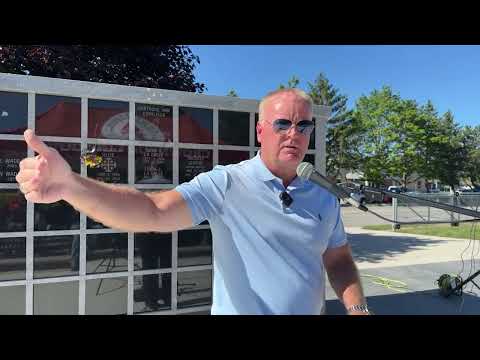
At a public "Mondays with the Mayor" session at Maplewood Cemetery, the mayor updated residents on the downtown interceptor project — a 4-ft-diameter pipe installed roughly 30 ft deep that is about 20% complete and expected to reduce recurring downtown flooding; he also described traffic impacts and near-term paving milestones on Lewis and North Main streets.
The mayor of Crown Point told residents at a public "Mondays with the Mayor" at Maplewood Cemetery that the city's downtown interceptor project is under way and is intended to address long-standing downtown flooding.
"We're only about 20% done. It's It's a 2-year project," the mayor said, describing a 4-foot-diameter pipe running roughly 30 feet beneath Main Street and adjacent roads that will collect and convey stormwater to the wastewater plant on the east side of town.
The project has required traffic diversions on Lewis Street and nearby corridors, the mayor said, and Lewis Street has been repaved where the pipe runs under the road. Engineers expect the North Main Street portion near the project entrance to be finished within about a month. The mayor acknowledged temporary inconveniences — raised manhole covers and repaved stone surfaces at some driveway entrances — and said city staff will work with contractors to resolve localized repairs once the large-bore installation is complete.
The mayor framed the interceptor as a long-planned response to a chronic drainage problem, saying the plan predates recent storms and earlier councils and engineers assembled the design. "That's what's been portrayed (on social media) 100% wrong," he said. He described the interceptor as the backbone — a 4-ft main the smaller storm pipes can feed into, allowing water to flow away from low-lying streets and yards.
City officials said the work began after several years of design and permitting; the mayor stated the project had been on city plans since 2017. He described the program as a two-year construction schedule and said the city will continue to update the public during its twice-monthly Board of Works meetings and through the city's online livestreams.
What happens next: engineers will continue to oversee the installation and short-term traffic and pavement repairs; the mayor urged residents affected by the work to contact city staff for details and specific concerns.