Get Full Government Meeting Transcripts, Videos, & Alerts Forever!
Get email alerts on the Water Capacity topic
No spam. Unsubscribe anytime.
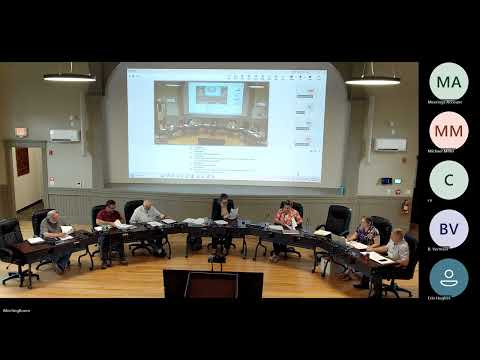
Enfield Select Board debates water-capacity report and whether to count McConnell well as usable supply
Summary
The Select Board reviewed a water-capacity study and raised methodological questions — notably whether the McConnell well is currently usable and should be counted in available capacity — and discussed options including filtration, decommissioning, new wells, developer-funded fixes, and impact fees.
The Enfield Select Board held an extended discussion of a water-capacity study circulated to the board and public. Members said the report should emphasize three core numbers: total permitted capacity, current usage, and available capacity. Several members said the study over-emphasized a case study and left methodological questions unanswered, including how the permitted amounts are determined and whether the McConnell well should be treated as existing capacity.
One board member said the McConnell well "is not usable unless something's changed," and suggested the well should be removed from immediate-capacity calculations until the town invests in treatment or filtration. The town's water operator and staff discussed potential remedies — a filtration or treatment system, repairs, or possible decommissioning — and noted the developer community has indicated willingness to consider paying for system upgrades as part of a connection agreement.
Members presented different estimates for system usage depending on whether McConnell is included: "If you include the McConnell well, we're at 34%. If you remove it, we're at 50%." Board members said that difference materially affects how much water the town can allocate to new connections and how the town approaches impact fees or developer contributions.
Public commenters with water expertise added context. Roy Holland (former emergency-management director) said his work in the recent drought with the town operator produced similar capacity estimates but urged engineers to answer specific methodological questions. Sharon Buffet reviewed a Verdant memo about Laram Farms and said Verdant's review relied on existing data and that hydraulic modeling and design-level analysis would be required if Laram Farms or another large developer seeks to connect to the town system; she argued those costs should be borne by the applicant rather than spread across existing water users.
The board did not take a final policy vote but directed staff to continue discussions, collect engineering clarifications (including the McConnell filter/system report), and return with additional analysis of capacity calculations and possible financing options for remediation or impact fees.
What happens next: staff will work with engineers (including the McConnell well report from McClure Engineering) to clarify methodology, cost estimates for filtration or repair, and whether decommissioning is required if remediation is not feasible. The board will revisit water-capacity allocations and related policy decisions.