Get Full Government Meeting Transcripts, Videos, & Alerts Forever!
Get email alerts on the Energy Storage topic
No spam. Unsubscribe anytime.
Engineer warns of fire risk and regulatory gaps as battery storage interest grows in Belgrade
Summary
A licensed engineer briefed the Belgrade Planning Board on grid-scale battery energy storage systems, flagging fire risks, siting and emergency-response gaps and urging the town to consider ordinance language and fire-department planning before projects arrive.
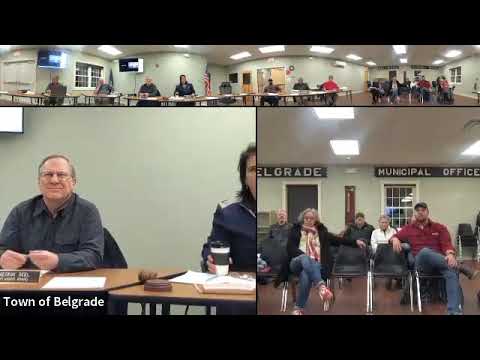
Tom Daniels, a licensed professional civil engineer, told the Belgrade Planning Board on Feb. 5 that large, shipping-container battery energy storage systems are becoming more common and that Belgrade’s land-use rules do not yet address them specifically. “These are large grid-scale batteries… picture a shipping container that’s filled with lithium ion batteries,” Daniels said, adding that some facilities have burned multiple times in other states.
Daniels explained how systems operate: they store excess generation and inject power back to the grid at peak demand. He said projects can be sited anywhere with favorable interconnection on the distribution system and do not have to be adjacent to solar arrays. “Anywhere on the distribution grid, they can say there’s congestion, site one of these facilities,” he said.
Board members asked about health, environmental and emergency-response risks. Daniels said most units are self-contained, with fans and inverters, and include oil-filled electrical equipment similar to substations. He emphasized that fire departments need to be involved in siting discussions because local rural departments may lack hydrant access or foam agents suitable for large lithium fires. “Most of them have built‑in fire suppression systems… in a rural town like Belgrade we don’t have a water source,” he said.
Daniels recommended the Planning Board review model ordinances from nearby states and involve the fire and rescue department in any local rules. He also cited state-level incentives and targets that make such projects more attractive to developers; board members noted examples of projects and proposals elsewhere in Maine.
The board did not take formal action but signaled interest in advancing regulations that would address setbacks, decommissioning, stormwater and emergency-response planning. Planning staff said the town should also track state guidance and bring affected departments, such as fire/rescue, into discussions before a project arrives.