Get Full Government Meeting Transcripts, Videos, & Alerts Forever!
Get email alerts on the Land Use topic
No spam. Unsubscribe anytime.
Winthrop committee urges zoning updates on data centers and a short‑term‑rental inventory
Summary
The comprehensive‑plan implementation committee recommended zoning amendments to define data centers, preserve first‑floor commercial space downtown, and direct staff to inventory short‑term rentals. Councilors also discussed reenrolling in a resilience partnership and possible community actions such as EV chargers and a battery‑backup lending program.
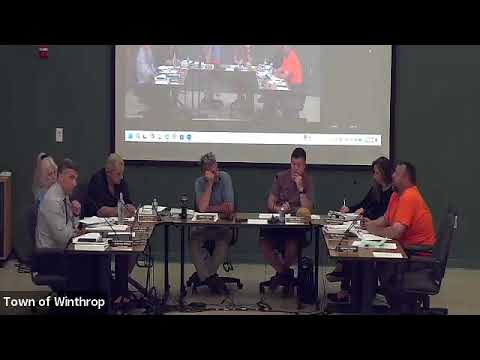
The Winthrop comprehensive‑plan implementation committee on June 15 presented four economic strategies for council consideration and recommended several targeted zoning and data‑gathering steps.
Committee members proposed that the town amend its zoning ordinance to define "data center" so officials can better consider whether and where such facilities would be permitted. The committee did not recommend whether data centers should be allowed, only that the use be defined so the town can assess potential unintended consequences before reacting to individual proposals. Councilors noted that defining the term would allow the town and planning board to consider a moratorium or other regulatory approaches while the region and KVCOG develop model ordinances.
The committee also recommended a targeted downtown zoning change to discourage conversion of first‑floor commercial spaces to residential units between Town Hall Lane and Bowden Street and to preserve retail capacity as revitalization progresses.
On housing, the committee suggested staff gather a baseline inventory of short‑term rentals using a four‑category typology (home‑share, short seasonal, long seasonal that can be year‑round, and non‑habitable units). Councilors debated how the local seasonal housing tradition differs from year‑round short‑term rentals and asked staff to prioritize a housing‑stock assessment if needed.
Separately, staff briefed the council on options under the Community Resilience Partnership, including energy audits, EV charging, and a battery‑backup lending pilot. The battery program was described as a small‑cost way to provide households with temporary power in outages: "if the power goes out in the community and people don't have generators, they can get one of these battery backups and keep their refrigerator running," a councilor said.
Councilors asked staff to coordinate with KVCOG and other towns to draft model language and, if appropriate, bring a data‑center moratorium forward for temporary protection while models are prepared.