Get Full Government Meeting Transcripts, Videos, & Alerts Forever!
Get email alerts on the Comprehensive Plan topic
No spam. Unsubscribe anytime.
Planner outlines state-required fixes and timeline for Bristol comprehensive plan as residents raise zoning concerns
Summary
At a public workshop, Max Johnstone, senior planner with the Mid Coast Council of Governments, explained state-required edits to Bristol's draft comprehensive plan, clarified the future land use map is not a zoning ordinance, and invited more survey feedback as residents voiced concerns about village character and property rights.
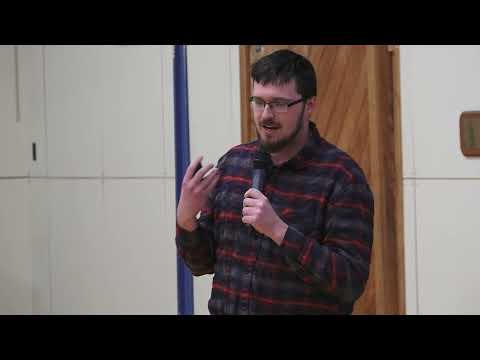
Max Johnstone, senior planner with the Mid Coast Council of Governments, told a packed workshop that Bristol's draft comprehensive plan needs a handful of state-required corrections and that the draft does not change zoning overnight.
"A comprehensive plan is data," Johnstone said, adding later, "the future land use map is not a zoning map." He said he intends to work with the planning board over the next two to three months to clarify map boundaries, reformat the capital improvement plan and add responsible parties and time frames for state goals so the state will accept a revised draft.
Why it matters: The plan is the town's 10-year guidance document and is used by grant reviewers and, should the town ever pursue zoning changes, as the policy foundation supporting those changes. Residents who fear immediate restrictions on private property rights raised questions about maps, the length of the draft and whether specific recommendations are mandatory.
Key details: Johnstone said the state marked six items as needing attention; three are primarily formatting and clarity fixes (data updates, legible maps and acknowledging a named local service), while three relate to the capital improvement plan, responsibilities/time frames for state goals, and the future land use map. The planner said the CIP will be reformatted to list projects likely to exceed $20,000 with estimated priority, timeline and likely funding sources. The draft identifies a $6.4 million school addition and lists two bridge projects and a tank-truck replacement among town projects.
Public reaction: Speakers at the workshop expressed a range of views. Jess Ates, a lifelong resident, said the plan covers more than land use and represents ideas that town leaders can consider. "I do think it has value in terms of providing our town leaders with a set of ideas for consideration," Ates said. Kenneth Court Meer urged residents to see the plan as the start of a participatory process rather than a finished mandate: "If it's approved it will set in place a process... and I hope we can all get behind" taking the next steps.
Concerns about zoning and map interpretation surfaced repeatedly. One participant asked, "What is zoning?" and Johnstone responded that zoning creates standards to keep incompatible uses out of residential areas and that the plan itself does not enact zoning. Several residents urged simplification of the draft's language and clearer mapping so voters can see exactly what is proposed.
Next steps: Johnstone said he hopes to send a revised draft to the state for review in April or May and that the town vote would follow later; he encouraged residents to complete the QR survey or email comments, and said he will continue to accept edits until the plan is formally submitted to the town for a vote.