Get Full Government Meeting Transcripts, Videos, & Alerts Forever!
Get email alerts on the Data Center Regulation topic
No spam. Unsubscribe anytime.
West Vincent adopts zoning rules for data centers, plans further refinements
Summary
The board adopted Ordinance Board 27‑2026 to regulate data centers in a limited industrial/commercial district, adding setbacks, height limits, buffering and disclosure requirements for electricity and water use; staff said the ordinance will be further reviewed against a regional model.
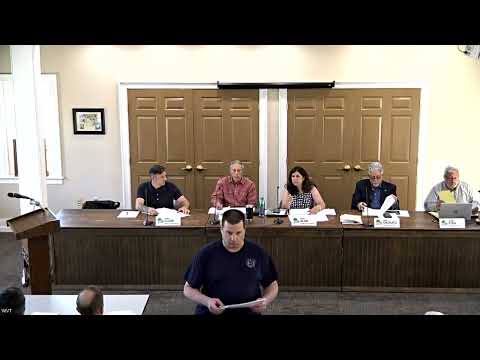
The West Vincent Township Board of Supervisors on June 15 adopted a zoning ordinance (Board 27‑2026) to regulate data‑center uses in the township’s Planned Commercial/Limited Industrial district along Route 100.
Township counsel introduced the ordinance at a public hearing, saying the draft fills a gap in the zoning code and would impose buffering, setbacks, height limits (60 feet maximum), incremental setback increases as height rises, landscaping and berming requirements, and noise‑level limits (DBA/DBC standards). The draft also requires applicants to disclose information about electrical and water demand and to include documentation of available utility capacity with applications.
Several members of the public urged the board to consider additional measures, including stronger setbacks, water‑use limitations and requirements for on‑site or paired renewable generation. A regional planning representative and residents noted that overly broad setbacks could make the district practically unusable and leave the township open to legal challenges; the solicitor said the township must balance restrictions with the legal requirement to permit lawful uses somewhere in municipal boundaries.
Board members said they intend to continue refining the ordinance in consultation with the Phoenix Regional Planning Commission’s model ordinance and will consider amendments (for example, solar‑ready roof requirements and more explicit water‑use disclosure) to strengthen environmental and community protections. The board voted to adopt the current ordinance as a starting point and directed staff to update it with regional recommendations where legally feasible.
A supervisor emphasized coordination with the regional planning commission to help defend the ordinance against potential legal challenges. The adoption does not preclude future amendments; staff said they will accept written comments for revision and will post materials provided during the public hearing.