Get Full Government Meeting Transcripts, Videos, & Alerts Forever!
Get email alerts on the Budget Spending Cap topic
No spam. Unsubscribe anytime.
Fort Walton Beach council debates outsourcing, fees and enterprise changes to meet 3% spending cap
Summary
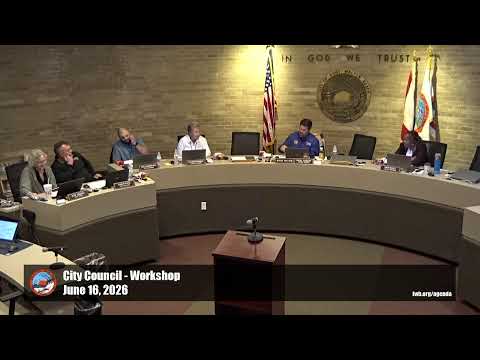
At a June 16 workshop, Fort Walton Beach council examined outsourcing city-run sports, daycare and senior programs and considered new user fees, enterprise-fund accounting and a possible fire-assessment or millage adjustment to close a roughly $500,000 operating shortfall and prepare for an estimated $1.7 million homestead-exemption impact.
Fort Walton Beach councilmembers spent a June 16 budget workshop laying out options to close an estimated $500,000 operating overage and to plan for a possible $1.7 million hit tied to a proposed homestead-exemption change. Staff and council discussed outsourcing recreation programs, shifting services off the city’s books, raising targeted user fees and changing enterprise-fund accounting as ways to reduce pressure on the city’s 3% spending cap.
The council did not take formal votes at the session but directed staff to return with cost estimates, enforcement plans and draft language where necessary. “A hard 3% cap doesn’t account for inflation, rising insurance premiums, increased construction costs, aging infrastructure, equipment replacement, or the growing demands placed on local government,” Councilman Merrill said, urging a systematic review of discretionary programs, city-owned properties and potential voter referenda for large service changes.
Why this matters: The council must balance legal limits on operating spending with the recurring costs of public safety, infrastructure and programs residents use. Several members said voters approved the 3% cap twice and that any structural changes should be transparent and tied to measurable goals.
Key proposals and numbers
- Outsourcing sports and youth programs: Staff estimated removing a little over $100,000 in operating expense by contracting with outside providers for recreation leagues while preserving access for youth. Council asked staff for market bids and scholarship provisions so low-income participants are not priced out.
- Daycare/aftercare and senior programming: Moving daycare operations off the city’s books could remove about $189,000 from the operating cap; senior-programming costs were estimated at about $58,000. Councilmembers favored returning with options that keep services available but that shift payroll or program expense to third-party providers when feasible.
- Events and sponsorships: Fireworks, concerts and parades carry an estimated ~$95,000 impact to the operating cap (not including staff overtime and cleanup costs). Council suggested pursuing sponsorships and lower-cost event formats; staff noted cleanup and police/fire overtime create additional expense beyond contracted production fees.
- Pool, Chamber and EDC grants: Council reviewed roughly $65,000 in current grants, including $25,000 for the community pool operator. Kathy Heapy of the Emerald Coast Fitness Foundation, which operates the pool, urged prioritizing swim instruction: “people die because they don’t know how to swim,” she said, asking the council to consider trading some event funding to preserve pool lessons.
- Online-only billing: Utility billing staff reported about 18% of customers still transact in person or by mail. Moving to an online-first model could free staffing hours (allowing reallocation rather than hiring) and reduce office open hours; council members requested plans for kiosks, transition supports for seniors and options to manage portal transaction fees so residents aren’t burdened.
- Parking and boat-ramp fees, enterprise funds: Council discussed following an Okaloosa County RFP approach for parking/ramps or creating an enterprise fund to keep user-fee revenue outside the operating cap. Concerns included enforcement, collection logistics (license-plate or QR-code systems) and political pushback; staff will coordinate with the county and return options.
- Rec-center pricing: Staff provided resident and nonresident membership rates (youth free; resident access currently supported by policy; nonresident single $214/year, family $267.50/year). Rough membership demographics were presented so council could weigh higher out-of-city rates versus charging residents for some services.
- Rental property enterprise fund and rate studies: Council asked staff to analyze moving municipal rental properties to enterprise-style accounting (market rents and self-supporting operations) and to scope targeted rate studies (water, sanitation, recreation) that can be done internally or by third-party vendors.
- Fire department needs and assessment options: Fire Chief Derek Fox outlined equipment and facility needs, including federal- and state-driven gear upgrades and apparatus costs that have risen sharply. “A fire engine that used to cost $600,000 fully equipped is now about $1.2 million,” Chief Fox said, and ladder trucks can exceed $2 million with multi-year lead times. Staff described consultant-crafted fire-assessment (MSBU) tiers, waivers and protections used elsewhere; council was split on pursuing a fee and asked for further legal and equity analysis.
Claims, safeguards and legal notes
Council members repeatedly emphasized the difference between cutting services and changing how they are funded. Some members warned against appearing to overturn voter-approved limits; others said the cap requires the council to consider modest millage increases, user-fee adjustments or targeted new assessments if substantive cuts would unduly damage public safety or core services. Staff pointed to existing constraints (procurement timelines, statutory rules and the charter amendment that created the 3% cap) and said legal counsel would be engaged for any fee or referendum path.
Next steps
Staff will return with: market bids and implementation plans for outsourcing sports/daycare/senior programming; cost and transition plans for online billing (including kiosk and senior-assistance options); parking/ramp fee models coordinated with the county; rec-center revenue scenarios; a scope and price for rate studies; and a consultant briefing on fire-assessment options, costs and waiver frameworks. No formal decisions were made at the workshop; council indicated additional workshops and follow-ups before the August budget presentation.
The council’s procedural next step is for staff to present detailed proposals and estimated fiscal impacts at a future meeting so members can make line-item choices for the 2026–27 tentative budget.