Get Full Government Meeting Transcripts, Videos, & Alerts Forever!
Get email alerts on the Enforcement Caseload topic
No spam. Unsubscribe anytime.
CSLB shifts complaint handling as caseloads surge and timelines grow
Summary
The Contractors State License Board reported a sharp rise in consumer-filed complaints and unprecedented enforcement strain; staff proposed triage measures including a consumer-education video, small-claims referrals for losses under $10,000, increased letters of admonishment and DA referrals for repeat offenders.
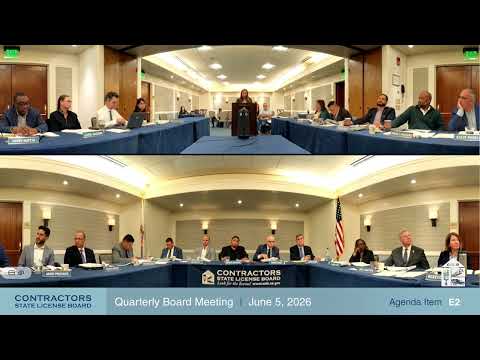
The Contractors State License Board on Wednesday outlined operational changes after enforcement staff reported a surge in consumer-filed complaints that has overwhelmed existing resources.
Enforcement leadership said complaints have climbed sharply — roughly 1,500 more complaints were received in the first four months of 2026 than in the same period of 2025 — and staff workloads now exceed recommended levels. "SSA now have more than 100 open assignments" versus an optimum of 60, and the pending enforcement caseload was reported at about 5,850 versus an optimum of 4,250.
Staff presented several temporary process changes to preserve capacity for high-priority investigations: cases with contract- and financial-injury allegations under $10,000 would be referred to small-claims court instead of staff mediation; letters of admonishment (LOAs) would be issued more quickly for less-egregious violations (with up to two years of public disclosure); repeat offenders would be referred for legal action or DA referral; and automated intake letters would explain limited mediation capacity and provide guidance on demand letters, bond claims and small-claims filing.
Public affairs staff also unveiled a six-minute consumer-education video explaining the complaint process, what information to provide and steps consumers can take before filing to improve resolution prospects. "The video includes clear explanations of the complaint process, what information to provide, what consumers can expect through the resolution timeline," a public affairs representative said.
Several public commenters pressed the board on performance metrics. Andrea Montano, speaking as a consumer-advocate, cited the CSLB enforcement annual statistical report and said the average time to a final administrative decision is now 833 days and investigator productivity has declined. Commenters called for improved communication with victims during investigations and for additional steps to prevent repeat offenders from reentering the market under new licenses.
Board members said consumer education and the multi-offender unit are important steps, and asked staff to return to the enforcement committee with data on LOA outcomes and other effectiveness measures.