Get Full Government Meeting Transcripts, Videos, & Alerts Forever!
Get email alerts on the Business Permitting topic
No spam. Unsubscribe anytime.
West Bath Planning Board approves 'Tilted' bar in existing commercial space
Summary
The West Bath Planning Board on Feb. 10 approved an applicant's request to open a Class A lounge called Tilted in an existing commercial building, subject to required health‑inspector and fire‑department clearances and food‑service requirements.
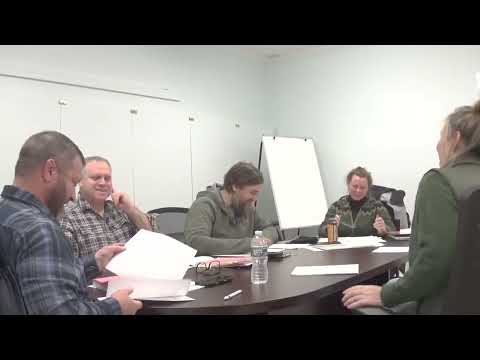
The West Bath Planning Board voted Feb. 10 to approve an application to open a small bar called Tilted in a former brewery space, board Chair Gabe Whitney said at the meeting.
Michelle, the applicant, told the board her ``idea of my project is to open a bar'' and described it as a quiet, cozy neighborhood establishment that will use the existing building footprint and remove prior brewery equipment rather than change the structure. She said the business will offer beer and liquor over the counter and will be called Tilted.
Board members focused on operational and licensing details. The applicant said the establishment must carry a Class A lounge liquor license and must serve a minimal food menu (she cited the need to have about five menu items and either hot or cold options). She told the board a health inspector had issued a short punch list, that she has sent the inspector photos of completed items and that she is waiting for a freezer and refrigerator to arrive before the inspector returns. She also said the fire department must confirm whether a two‑burner device can be used for a limited item such as chowder.
The board discussed occupancy and hours. Members referenced a 50‑person occupancy limit (one member noted paperwork listed 49.5 and others treated it as 50) and raised hours constraints; the applicant said Friday and Saturday could run as late as 1 a.m. The board also reviewed rules about minors and liquor licenses, noting parental‑accompaniment exceptions and the role of state/local licensing authorities.
After discussion, a board member moved to approve the application; another member seconded the motion and the board voted in favor. No roll‑call tally was recorded in the meeting transcript; the chair congratulated the applicant following the vote. The applicant said she had hoped to open for Valentine’s Day but expected to be ready by St. Patrick’s Day if outstanding equipment arrives.
The approval is subject to the normal permitting steps: completion of health‑inspector items, any required fire‑department clearances and final licensing through the relevant authorities (the applicant referenced DHHS as the licensing oversight). The transcript does not record additional formal conditions or a detailed vote tally.
Board members and the applicant also discussed neighborhood context, noting limited nearby residences, prior exceptions for low‑impact entertainment at other businesses, and local infrastructure questions such as septic capacity (the applicant said she did not know the septic size).
The board’s action allows the applicant to proceed with remaining inspections and licensing; the meeting transcript does not record further administrative deadlines or follow‑up assignments.