Get Full Government Meeting Transcripts, Videos, & Alerts Forever!
Get email alerts on the SB342 topic
No spam. Unsubscribe anytime.
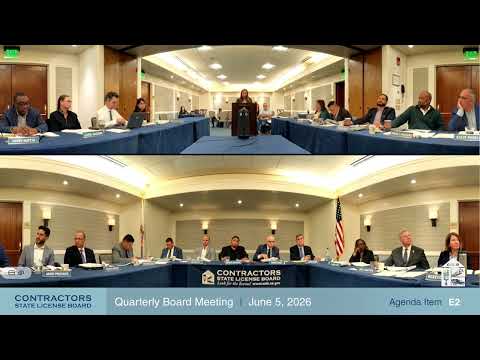
CSLB flags enforcement costs as bill would let unlicensed contractors seek payment
Summary
The Contractors State License Board discussed SB342, which would allow contractors to recover payment for work performed while licensed but could also enable recovery for work during licensing gaps; staff warned the measure could sharply increase complaints and enforcement costs unless amended to exclude home-improvement projects.
A state licensing board on Wednesday warned that a bill intended to make recovery easier for contractors could increase complaints and enforcement costs unless amended to exclude home-improvement work.
"This bill addresses industry concerns that current law may allow a consumer to avoid paying for work performed if a contractor's license lapses even briefly," said Chief May of the Contractors State License Board. He told the board staff expect "a substantial increase in both the volume and complexity of complaints" if the change allows more contractors to pursue civil recovery for work done while unlicensed. Staff estimated the added enforcement workload could cost more than $2 million in fiscal year 2027–28 and ongoing.
SB342, described in the meeting materials, would remove the prohibition on a contractor bringing an action for recovery of compensation for all work conducted if the contractor was not duly licensed at all times, while allowing recovery for work conducted when the contractor was duly licensed. Board staff said existing law already provides some administrative flexibility, such as retroactive renewal within 90 days.
Board members and commenters urged preserving the residential protections currently found in Business and Professions Code section 7031. One board member noted that section 7031 has been a "strong consumer protection statute for residential projects" and asked the board to monitor and oppose any amendment that would narrow a residential carveout.
Chief May said the bill's author had agreed to consider the board's amendment to exclude home improvement, but he cautioned that the bill had not yet been referred to an Assembly policy committee where amendments could be taken. "To date, SB342 has not yet been amended because it has not been referred to a policy committee in the Assembly since February," he said.
Staff recommended the board take no further action at the meeting while the author considers amendments. The board did not take additional formal action on SB342 during this session.
Background: commenters and staff emphasized that most CSLB complaints involve home-improvement work; excluding that sector from SB342's scope would limit workload increases while preserving consumer protections. The board's continued monitoring will focus on whether an amendment excluding home improvement is inserted before further committee hearings.