Get Full Government Meeting Transcripts, Videos, & Alerts Forever!
Get email alerts on the Deer Management topic
No spam. Unsubscribe anytime.
State wildlife official tells Westport Island residents deer numbers are high; urges committee, outlines expanded‑archery and special‑hunt options
Summary
At a Westport Island public meeting, a state regional wildlife official described an overabundant white‑tailed deer population linked to rising tick‑borne disease risk and outlined management options—expanded archery, town‑requested special hunts, professional sharpshooters and contraception—urging a town deer committee and a May/June timeline to begin rulemaking.
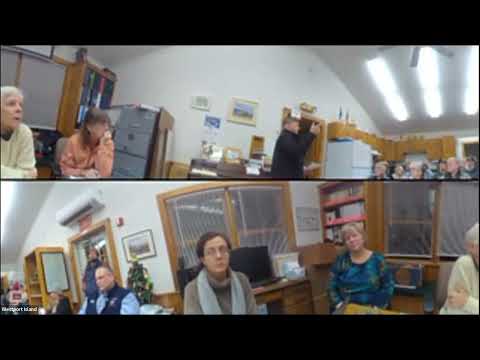
A state wildlife official told Westport Island residents that the island is part of a coastal‑Maine pattern of too many white‑tailed deer and urged the community to form a town deer committee to pursue management options, including expanded archery and a town‑requested special hunt.
The regional wildlife biologist, speaking for the state Fish and Wildlife field staff, said district estimates can understate island densities and offered a back‑of‑the‑envelope calculation using Westport’s roughly nine square miles to show island counts could be in the low hundreds. “We know you got…way too many,” the official told the audience, arguing higher deer numbers are linked to elevated tick‑borne disease and damage to forest and garden vegetation.
Why it matters: residents raised concerns about human health, nuisance browsing of gardens and reductions in forest regeneration. The presenter said that to reduce tick‑related human‑health risk, deer densities typically need to drop to about 10 or fewer deer per square mile—well below the densities many coastal islands see now.
How it would work: the official outlined a stepped approach. Expanded archery would permit additional archery opportunity in a designated area; a town can petition the state, which forwards proposals to an advisory council and opens a rulemaking process with public comment. A special hunt—typically a short, targeted period using firearms—requires more mapping, property owner agreements and advisory‑council review but can be used to generate larger short‑term reductions.
Cost and logistics: the official warned that some interventions are costly or impractical. He said surgical or chemical contraception is expensive in practice—citing an example where sterilization can cost about $1,500 per deer—and that trap‑and‑transfer is not a feasible option because capture mortality can be high. He also described hiring professional sharpshooters as an effective but expensive management tool used on other islands.
Residents, hunters and a local law enforcement officer spoke at the meeting. Several hunters said expanded archery had worked in nearby towns to increase harvest through extra tags and seasons; a law enforcement officer said legal local hunters help deter poaching and that limited wardens make local cooperation important. The official identified the Lincoln County advisory council representative (Wayne Goodall) as the person the town should brief as it crafts any petition.
Timing and next steps: the presenter said the typical citizen‑initiated rulemaking timeline is about three months, and urged the town to assemble a deer committee, finalize a proposal and contact the advisory council soon if the community wants regulatory changes in time for this fall’s hunting opportunities. He recommended using Islesboro’s committee minutes as a template, said the town could hold a special town meeting if needed, and asked for volunteers; several residents offered to serve. The select board plans to discuss the issue at its regular Wednesday workshop.
What wasn’t decided: no formal vote or town petition was made at the meeting. Residents and officials discussed tradeoffs—safety, property access, timing of seasons, and the need for mapped areas for special hunts—but any formal request to change seasons or create a special hunt requires the advisory‑council and rulemaking steps the official described.
Representative quotes from the meeting:
• The regional wildlife biologist: “You got…way too many,” and “to get tick‑related human‑health benefits you need to get them down to about 10 or less per square mile.”
• A law enforcement officer: legal, local hunters “are present when the bad hunters are there to report it,” a point offered in support of opening lawful harvest to reduce poaching and improve enforcement.
• A resident hunter: expanded archery “is a very effective tool. It’s safe. It cost the islanders nothing,” arguing the town could increase harvest without direct cost to residents.
Next procedural step: residents who volunteered will form a deer committee to gather input, draft a petition or proposal and meet with the state advisory council representative; the select board will follow up at its next workshop.
Reporting note: the meeting was an informational public session; no ordinance, motion or formal action was adopted at this gathering.