Get Full Government Meeting Transcripts, Videos, & Alerts Forever!
Get email alerts on the Emergency Management topic
No spam. Unsubscribe anytime.
Council debates siren policy after June 10 storms as officials weigh automation
Summary
After June 10 storm damage and differing real-time reports, Springfield's fire chief defended decisions not to activate city-wide sirens, while aldermen pressed for clearer criteria, more cross-jurisdictional coordination and possible automated triggers.
Springfield's mayoral meeting on June 16 centered on why outdoor warning sirens did not sound for all residents during the damaging June 10 weather event and what the city should change before a forecast period of storms.
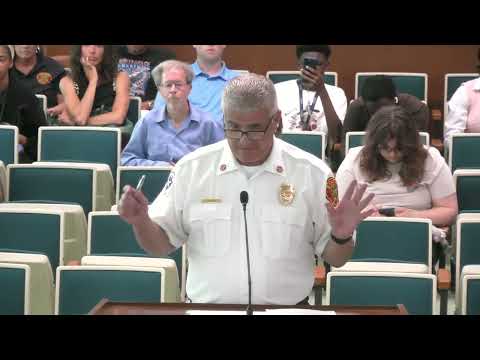
"Decisions are based on real-time conditions, National Weather Service information and verified reports available at the time," Springfield Fire Department Chief Zummo said in a detailed timeline presentation to the council. He showed how early warnings and spotter reports first indicated tornado activity north of the city and noted post‑storm assessments later identified an EF‑1 tornado in the region.
Several aldermen said residents perceived a mismatch between media footage and the city's public alerts. "You let us down," Alderman Rockford told the chief at one point, reflecting frustration in parts of the north side where residents reported seeing funnel clouds and localized damage. Rockford and others asked if county-level alerts or nearby siren activations (Athens, Riverton) should trigger Springfield's system as a precaution.
Chief Zummo said Springfield's activation criteria—tornado warnings specifically listing the city, sustained winds of 70 mph or more, hail of at least 1.75 inches, or visual confirmation by spotters or public safety personnel—have guided past decisions and were adopted to limit false activations. He said the department is reviewing an automated siren activation option but cautioned automation can increase false alarms and still requires human oversight.
Council members also raised gaps in public sheltering and outreach. Alderman Gregory pressed the city to identify shelters and to formalize neighborhood support for vulnerable residents, including people experiencing homelessness. "I'd rather a siren go off and it doesn't come and everybody's safe than nothing come and I...don't know what our relationship or dependency is on the National Weather Service," Gregory said.
The presentation and discussion concluded with officials saying they will continue an after‑action review and consider layered approaches—improving interagency chat/spotter communication, public education on phone-based wireless alerts and potential automation—while balancing the risk of alert fatigue.
The council did not adopt a new siren policy or automated‑activation ordinance at the meeting; officials said follow-up analysis and additional briefings will be scheduled.