Get Full Government Meeting Transcripts, Videos, & Alerts Forever!
Get email alerts on the Tax Policy topic
No spam. Unsubscribe anytime.
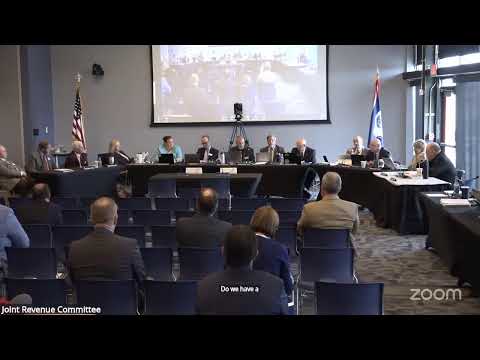
Panel weighs property‑tax treatment of wind, solar and data centers; asks staff for bill drafts
Summary
County assessors described income, cost and market approaches to valuing independent power producers; lawmakers approved a bill‑draft request to classify data centers as industrial and asked LSO to redraft a prior electricity taxation bill.
A legislative committee heard from county assessors and stakeholders about how Wyoming values and taxes independent power producers, including wind turbines, solar farms and potential data centers, and then approved two bill‑draft actions.
Converse County Assessor Dixie Huxville explained that assessors use the three‑approach appraisal framework — cost, market and income — and that, in her county, independent power producers’ assets are generally taxed as industrial personal property while land is often leased and taxed to the landowner under local rules. “When something’s first built we often rely on cost; as the life progresses we reconcile income approaches,” she said.
Laramie County Assessor Todd Ernst added that while turbine footprints are small, ancillary infrastructure and roads can complicate classification and that parcels hosting solar arrays can have different grazing or use restrictions that affect valuation.
Lawmakers acted: Representative Lean asked staff to draft a bill (referred to in the hearing transcript as a request to draft “3911101A” or similar draft language) to explicitly classify data centers as industrial for tax purposes; the motion was seconded and approved. Representative Brown moved LSO redraft House Bill 46 (a prior bill on electricity taxation for solar and nuclear resources) and the committee approved that motion as well.
Public comments reflected local concerns: Era Arino of the Rocky Mountain Farmers Union warned that changes to valuation could raise taxes on leased agricultural land used for energy projects and exacerbate financial pressure on farmers and ranchers; assessors noted statutory limits on how some leased federal lands are treated and described variability across counties.
What the committee asked staff to do: committee staff will assemble follow‑up data requests on taxing options, and committee members signaled they will spend time at the next meeting on commercial classifications and electricity‑tax options. No final change to state law was enacted at the hearing; the actions authorized bill drafting and redrafting by legislative service office staff.
Ending: The committee adjourned after approving the bill‑draft requests and scheduling follow‑up work on commercial classifications and electricity taxation.