Get Full Government Meeting Transcripts, Videos, & Alerts Forever!
Get email alerts on the Energy Policy topic
No spam. Unsubscribe anytime.
Wyoming committee hears clash over net metering and a possible ‘choice‑electric’ program as regulators, consumers and utilities disagree
Summary
Regulators, the consumer advocate, utilities and conservation groups told a legislative committee that a consumer ‘choice’ program for electricity would be technically and administratively complex and that current net‑metering compensation at retail rates shifts costs to other customers; stakeholders agreed more study and negotiated stakeholder talks are needed.
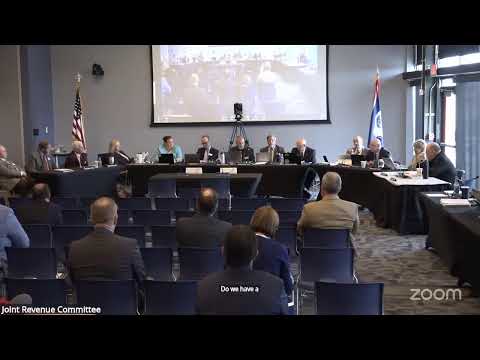
Lawmakers convened a Wyoming legislative committee hearing focused on net metering and a proposed “choice‑electric” program, hearing technical testimony from the Wyoming Public Service Commission, the Office of Consumer Advocate, utilities and advocacy groups. Deputy Chairman Chris Petri of the PSC told the panel the mechanics of tracking the non‑energy attributes of electricity — essentially trying to sort which electrons are “green” versus “brown” — make customer fuel choice far more complicated than comparable programs for natural gas.
Petri, the PSC deputy chairman, said Wyoming’s experience with green‑tag and choice‑gas programs provides lessons but warned that electricity’s lack of easy storage and the need to preserve grid balance add layers of difficulty. “You end up with a distribution utility that owns and operates the physical system,” Petri said, “but arranging for nonutility suppliers and the transmission needed to deliver power from generators to customers is a complex and delicate undertaking.”
Why it matters: committee members framed the discussion as a practical policy question with fiscal and reliability implications. If customers who install rooftop solar are credited at retail rates for exported energy, other customers can absorb a growing share of fixed system costs, the PSC and consumer advocates warned. Anthony Ornellis, administrator for the Wyoming Office of Consumer Advocate, urged the committee to examine rate‑design changes that would collect more fixed system costs through a customer charge rather than per‑kilowatt‑hour charges, noting such a change could raise monthly fixed charges substantially if applied comprehensively.
The consumer advocate said: “If you moved fixed costs into a straight fixed monthly charge, that amount might rise from the current $10–$20 range to something like $40–$60 a month,” and that change would require careful policy choices to avoid disproportionate hardship.
Industry cautions: utilities said retail deregulation and even a narrow fuel‑choice model would require major structural changes. David Bush of Black Hills Energy said deregulated states have often experienced higher retail prices and customer‑service complications, and Rocky Mountain Power counsel Nathan Nicholas explained that electricity markets and wholesale participation currently limit third‑party retail sellers’ options. “Electricity is not easily storeable; the market structure that supports gas choice does not map cleanly to electricity,” Nicholas said.
Claims and counterpoints: committee members and the PSC repeatedly raised the cost‑shift issue: net‑metering customers are typically compensated at retail rates, which include components that pay for poles, wires and other fixed infrastructure. Petri and others said a move toward paying net‑metering customers an avoided‑cost or wholesale rate would reduce that cross‑subsidy. Industry witnesses acknowledged the policy trade‑offs and highlighted reliability and administrative risks; conservation advocates said negotiated stakeholder processes were under way to seek compromises.
Public‑stakeholder process: John Burroughs of the Wyoming Outdoor Council reported that stakeholders, including several utilities and advocacy groups, had begun third‑party‑facilitated talks to seek agreements in principle after prior bills failed to pass. He said the process was just starting and hopes to deliver common ground by fall.
What’s next: the committee collected data requests and signaled it will dedicate time at a future meeting to electricity taxing options and net‑metering technical questions. Members asked staff to return cost and penetration data; PSC staff agreed to resend an earlier follow‑up packet. The committee did not take final legislative action on net‑metering or choice‑electric policy during this session.
Ending: With experts portraying the issue as a mix of technical grid‑management, billing design and consumer‑protection choices, lawmakers closed the debate for now and scheduled follow‑up briefings and stakeholder reporting ahead of any bill drafting.