Get Full Government Meeting Transcripts, Videos, & Alerts Forever!
Get email alerts on the Property Tax topic
No spam. Unsubscribe anytime.
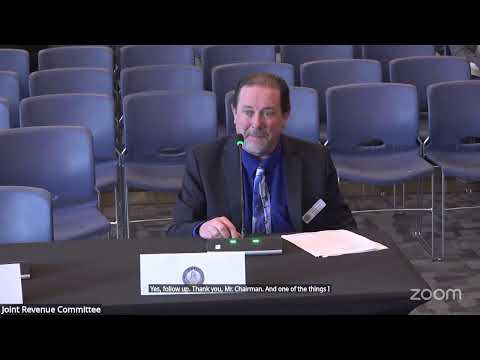
Joint Revenue Committee rejects proposed owner‑occupied carve‑out in Amendment A to create residential property class
Summary
Lawmakers debated a constitutional amendment to separate residential property into its own tax class and proposed limiting a preferred rate to owner‑occupied homes. After heated discussion about Teton County valuations and constitutional limits on subclasses, the committee’s voice vote resulted in the amendment failing.
The Joint Revenue Committee voted down a proposed change to Amendment A, a constitutional amendment to create a separate residential property class from the "all other property" class, after members debated whether relief should be targeted to owner‑occupied homes.
The amendment discussed would enable the legislature to place residential property in its own class; earlier drafts proposed an 8.3% assessment rate for residential parcels compared with the all‑other rate the committee said is currently 9.5%. LSO staff clarified the amendment creates the class but the legislature still sets the rate and must define "residential property." Senator Casease told the committee the drafter’s intent was to separate residential property and that a prior bill (Senate File 78) had proposed an 8.3% rate and a definition of residential property.
Representative Stybar proposed narrowing the reduction so only owner‑occupied primary residences would receive the lower rate, leaving other residential properties — including high‑value second homes common in parts of Teton County — at the higher level. "The whole reason we're trying to provide property tax relief is to help people stay in their homes," the representative said, arguing the reduction should focus on homeowners rather than seasonal or investment properties.
Other members pushed back, noting constitutional constraints. LSO counsel and staff explained the amendment allows for one optional subclass for primary residences but warned that creating additional value‑based subclasses (for instance, splits by dollar thresholds) could violate the constitution’s prohibition on unauthorized subclasses. Members also cited fiscal consequences: one committee member said Teton County accounts for a significant share of statewide residential property tax revenue, which complicates any uniform relief.
After discussion the committee took a voice vote. The chair announced, "Pretty sure the nos have it," and the amendment did not pass.
The committee then moved on to other agenda items; staff recorded several follow‑up requests, including requests for revenue and distribution analyses and legal clarifications about permitted subclassing under the state constitution.
The committee’s decision leaves open future options for the legislature to refine definitions, consider targeted relief programs, or pursue alternate measures to address homeowner burden. No further committee action on Amendment A was recorded during the hearing.