Get Full Government Meeting Transcripts, Videos, & Alerts Forever!
Get email alerts on the Budget topic
No spam. Unsubscribe anytime.
Game and Fish projects multi-year shortfalls; agency urges new revenue options
Summary
Wyoming Game and Fish told a legislative interim it faces multi-year deficits unless new revenue or spending changes are adopted; staff presented a FY27 revenue estimate of $112.4 million and projected an $11 million shortfall that will draw down reserves toward roughly $75 million by 2030 without intervention.
The Wyoming Game and Fish Department told the Joint Travel, Recreation and Wildlife Committee on Wednesday that the agency's current revenue mix — largely hunting and fishing license sales plus federal aid and grants — will not sustain planned operations and conservation work without additional revenue or structural changes.
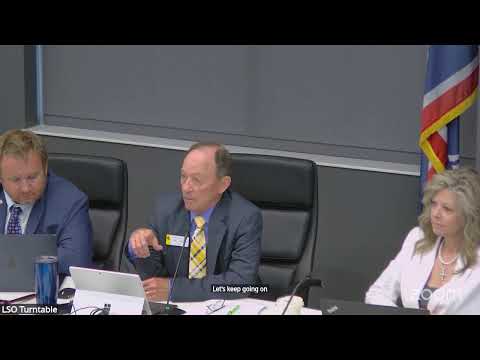
Director Ashleigh Bruscato and Chief Financial Officer Meredith Wood presented a department projection that estimates roughly $112.4 million in revenue for fiscal 2027 but said projected expenditures will exceed that by about $11 million in FY27. "We anticipate we're going to spend 11 million more than we're going to generate in license revenue and federal aid and grants," CFO Meredith Wood said during the budget briefing.
Those near-term shortfalls, officials warned, would require the department to draw on cash reserves. Wood's presentation showed available expendable cash dropping in successive years and noted that, absent new revenue or expenditure reductions, the department's available funds could fall toward roughly $75 million by 2030. Some of the department's larger balances are invested in a pool A account and an inviolate wildlife trust corpus; both provide investment returns but are subject to statutory constraints and, in some cases, longer lead times to access principal.
Why it matters
Wyoming's Game and Fish is largely a fee-funded agency: license and stamp sales make up the single largest revenue stream. The department said license revenue accounts for about 60% of its operating budget and federal aid roughly 21%. Because the agency must predict its own income, officials say periodic increases, new revenue mechanisms, or legislative action will probably be necessary to sustain current services, staff, and conservation programs as costs rise.
Proposed levers and constraints
Officials and LSO staff reviewed a menu of options lawmakers and the commission could consider. Those included: raising non-resident preference point fees (the commission is statutorily authorized to raise points up to specified caps and might capture an estimated $14 million annually under a proposed change), adjusting the aquatic invasive species (AIS) decal fee (the decal program currently covers only part of AIS program costs), exploring limited commission authority to adopt modest, inflation-based fee increases, and evaluating alternative long-term revenue sources such as lodging or sales-tax allocations, lottery proceeds, or dedicated legacy funds used by other states.
"We are responsible for projecting revenue and running the department; the commission sets the budget, but it is often the Legislature that authorizes new revenue levers," Director Bruscato told the committee.
What the department can and cannot do
The department noted that some revenue sources have statutory strings. Federal PR/DJ grants are formula-based and come with eligible activities and match requirements, and some trust and corpus accounts limit spending to interest or to transfers constrained by statute. The department's pool A investment account has grown since being placed there in late 2022; staff said projected investment returns could be redirected to operations but that tapping principal would be a policy decision with longer timing implications.
Next steps
Committee members and stakeholders expressed support for broader conversations about who should shoulder the costs of wildlife conservation — license buyers, visitors who benefit from wildlife-driven tourism, or the general state budget. Director Bruscato asked the committee to consider both near-term adjustments (fee policy changes or recoupment of license costs the state previously authorized) and long-term structural ideas (a dedicated endowment or recurring state allocation) as the committee prepares recommendations for future sessions. "Investing in wildlife is an investment in Wyoming," Bruscato said.
Ending
The committee agreed to continue the discussion at its September meeting and asked agency staff and LSO to return with more refined fiscal scenarios and legal analyses on the range of options.