Get Full Government Meeting Transcripts, Videos, & Alerts Forever!
Get email alerts on the Drainage Easement Encroachment topic
No spam. Unsubscribe anytime.
Porter County advisory board approves after‑the‑fact construction within drainage easement
Summary
The Porter County Stormwater Advisory Board approved after‑the‑fact permission for two partially built structures, a compacted‑gravel parking surface and a six‑foot chain‑link fence that encroach roughly five to six feet into a 30‑foot drainage easement; final action by the stormwater management board and an executed hold‑harmless agreement are required.
The Porter County Stormwater Advisory Board voted to approve after‑the‑fact construction work that encroaches into a 30‑foot drainage easement, following a staff presentation and a brief exchange with the applicant and board members.
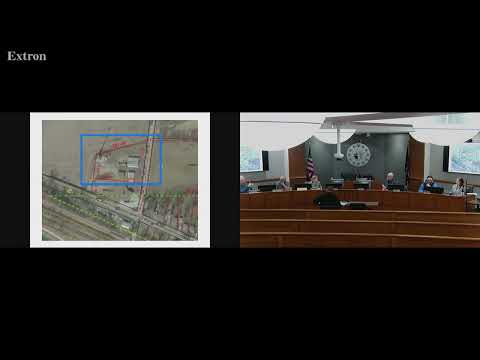
Chelsea, the stormwater staff member who delivered the report, said staff estimated the buildings "encroach approximately five feet into the easement" and noted two partially constructed buildings, compacted‑gravel impervious surface and a 6‑foot chain‑link fence within the easement. Chelsea recommended after‑the‑fact approval for the buildings, the impervious surface, the fence and the installation of a new storm sewer and swale, subject to standard terms and conditions and the execution of a hold‑harmless agreement with Porter County.
Why it matters: work inside drainage easements can affect maintenance access and flood conveyance. Chelsea told the board that, based on site review, the construction and impervious surface did not appear to have damaged the ditch, but that if damage is later found the applicant would be required to repair or reconstruct the drainage infrastructure to county specifications. She also said fence removal, if necessary for future ditch work, would be at the property owner’s expense.
Board members asked whether the recommendation should be contingent on the development review process; Chelsea said she did not expect substantial changes from development review that would alter the advisory board’s recommendation. Paul Nelson, joining remotely, said the project was flagged by the development review committee and that a committee member who reviewed the plans recalled the recorded drainage easement, prompting the referral to the drainage board. Nelson described the feature as "not a regulated drainage easement, but it is a drainage easement that was conveyed to the drainage board." The applicant and staff confirmed construction began last year and that building permits were not in place at the time construction started; subsequent review and documentation work are ongoing.
Motion and next steps: a motion to accept the staff recommendation, including the execution of a hold‑harmless agreement, passed by voice vote. The transcript does not record the names of the mover or seconder, nor a roll‑call tally. Chelsea said the item will be presented to the stormwater management board the following morning for final consideration and that the county will issue a final approval letter after the executed hold‑harmless agreement is returned.
Details provided to the board: staff estimated roughly five feet of encroachment (five to six feet in some places), proposed a new 12‑inch PVC storm sewer to tie into an existing drain tile system, and described a positive drainage swale with a 10‑foot‑wide emergency overflow area directing runoff to the detention basin and the named ditch. Staff also reminded the applicant to obtain a fence permit and any permits needed for work in the Porter County roadway, including a driveway permit from the Porter County Highway Department.
The advisory board’s action was advisory; the stormwater management board will consider final approval at its next meeting and the county will not issue a final letter until the hold‑harmless agreement is executed.