Get Full Government Meeting Transcripts, Videos, & Alerts Forever!
Get email alerts on the Industrial Siting topic
No spam. Unsubscribe anytime.
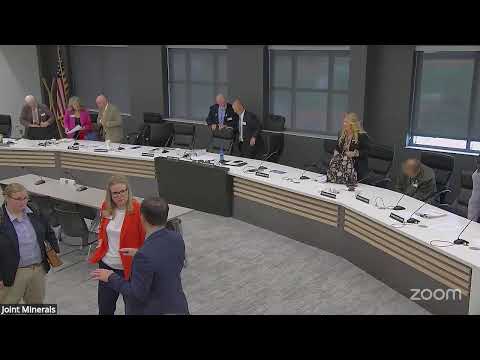
Committee advances industrial‑siting exemption after narrowing language and adding application clarity
Summary
Lawmakers approved amendments to a bill draft that would exempt some mineral processing facilities and projects in locally designated industrial parks from parts of the Industrial Siting Act, while adding staff recommendations on application information and timing. The committee modified statutory wording and directed further rule/legislative work.
A legislative committee on Wednesday advanced a draft that would exempt certain mineral processing facilities from the state’s Industrial Siting Act, after several hours of technical debate over definitions, local designations and mitigation. LSO attorney Mr. Fuller guided members through draft 0.5, saying it would add two exceptions: processing facilities built within the permitted area of an existing mine (or on property adjacent to mine‑permits) and leasable or locatable mineral processing facilities in industrial parks designated by local governments.
The bill prompted immediate questions about key words. Representative Riggins asked whether the term “minerals” would include natural gas; LSO staff said minerals are not defined in the draft and that the committee could consider using terms such as “leasable” or “locatable” to clarify coverage. Mr. Fuller also flagged the need to define “processing facility,” whether “existing” should be anchored to a date, and which local governments must make industrial‑park designations.
The Department of Environmental Quality’s deputy director, Nancy Beer, urged caution about language that would exempt facilities sited on land adjacent to permitted areas, noting that adjacent lands may not have prior permit reviews or baseline environmental analyses. Beer recommended moving existing statutory language about industrial sovereign zones into the newly framed exemption to make the scope explicit.
Rusty Bell, speaking for industry interests, said mineral processing operations want the same exemptions that non‑mineral processors have under current law and supported keeping language that encourages companies to negotiate with local governments on mitigation. Representative Campbell and others pressed for guardrails—smaller communities may lack capacity or funds to negotiate complex mitigation agreements.
On motions, Representative Ruffus moved to relocate the language referring to industrial sovereign zones into the new exemption; members approved that amendment. A later motion to eliminate a paragraph that staff had suggested (paragraph E) failed on a voice/hand vote. The committee adopted a staff‑recommended wording change to replace the statutory phrase “the applicant receives” with “the applicant requests” to clarify procedural timing. After a roll‑call, the committee approved the bill draft as amended and instructed staff to carry the changes forward.
What happens next: the committee asked LSO and staff to refine definitions and application language identified in the hearing, including: a clearer definition of “processing facility,” whether “mineral” should be narrower or limited, an event/date to define “existing,” and explicit local‑designation requirements. The committee also directed staff to provide the amended draft for the next packet so members and stakeholders can review precise text changes.
Quotes that frame the debate: Mr. Fuller summarized the draft’s intent: “This bill draft… provides that processing facilities that are constructed on the sites of existing coal or trona mines or that are constructed in existing industrial parks are exempt from the requirements of the industrial development information and siting act.” Deputy Director Beer cautioned, “Those lands may not have gone through a review because they’re not covered under a permit… there might not be baseline data.” Rusty Bell urged local engagement: “Companies… should be sitting down with the impacted communities and working on those things.”
The committee closed the public‑comment period with no sustained objections from the room and moved the amended draft forward for further refinement.