Get Full Government Meeting Transcripts, Videos, & Alerts Forever!
Get email alerts on the Federal Permitting topic
No spam. Unsubscribe anytime.
Legislators direct staff to draft communication over federal project notice, probe permitting gaps
Summary
After extended committee discussion, Joint TRW members voted unanimously to direct staff to draft a letter to federal agencies, the company and the state's congressional delegation expressing concern about notice and local-impact analysis related to a recent federal project briefing; staff were also asked to research other states' federal processes and to explore potential bill drafts on bonding and permitting.
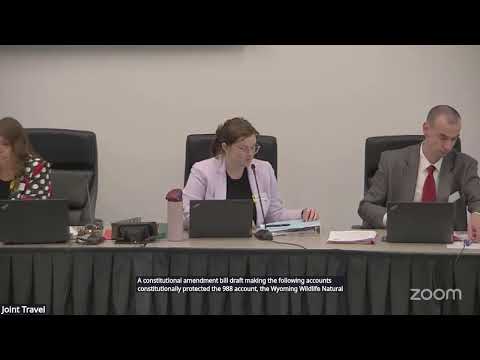
The Joint Travel, Recreation and Wildlife Committee concluded its Casper interim meeting by directing staff to draft a committee communication to federal agencies, the project sponsor, permitting agencies and the state's federal delegation to convey concerns raised earlier in the day about a federally driven project.
What the committee said
Multiple members said local governments and stakeholders received insufficient notice and that some local impacts — including recreation, road infrastructure and public-safety effects — were not adequately considered in the project's process. "I feel like we owe the room at least a communication about what was brought to us," the co‑chair said, urging a memorandum to federal partners and the company. Representative Connolly asked the committee to note that FERC's procedures differ from other federal NEPA processes and suggested asking the delegation to examine that discrepancy.
Motion and result
Representative Parson moved that the committee direct staff to draft the communication; Representative Thayer seconded. The committee approved the motion by voice vote without opposition.
Staff directives and potential policy work
Committee members asked staff to research how other states have engaged with federal projects and to prepare possible bill drafts for consideration. Ideas discussed included stronger bonding or reclamation requirements, incentives to use closed‑loop rather than open‑loop systems, and independent review requirements for certain hydrologic or environmental analyses. Members also noted an Environmental Impact Statement (EIS) is forthcoming and said they will revisit statutory or regulatory options as additional federal documents are published.
Why it matters: committee leaders framed the action as an effort to protect local governments' planning authority and to make sure multi-jurisdictional impacts are considered during federal permitting. Several members emphasized this is an initial step to inform federal partners and to gather data that could shape future statutory proposals.
What happens next: staff will draft the communication and circulate it to committee leadership for review, research federal permitting processes in other states, and prepare background materials and potential bill-draft concepts for future TRW meetings, including the September session in Jackson.