Get Full Government Meeting Transcripts, Videos, & Alerts Forever!
Get email alerts on the Artificial Intelligence topic
No spam. Unsubscribe anytime.
Wyoming Department of Education pushes training, vetting and scenario planning on AI — but resists rigid mandates
Summary
WDE described a two-track AI approach: immediate training and tool-vetting for districts, plus long-term scenario planning; officials urged guidance and vendor vetting rather than fast-moving legislation and offered free resources for districts and parents.
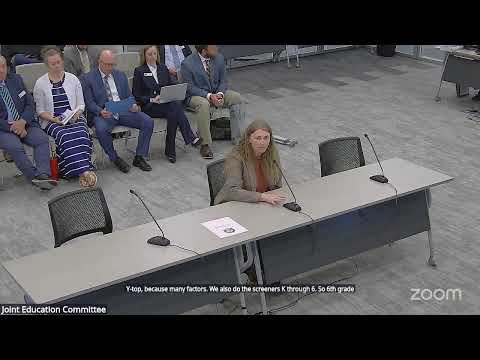
State education officials on Wednesday described efforts to help Wyoming schools adopt artificial intelligence safely and ethically, urging training and vendor vetting instead of immediate, prescriptive laws.
The Wyoming Department of Education framed AI work in two tracks: near-term support (teacher and administrator training, tool-vetting toolkits, privacy and data-security guidance) and future-oriented scenario planning about how more advanced AI might reshape K–12 instruction. Nathan Tajeski, chief innovation officer, said the department has produced AI literacy courses and a toolkit for evaluating vendors’ data practices and has begun matching districts with training and microcredentials.
Why it matters: School leaders and parents told lawmakers they are concerned that easy access to generative AI can erode students’ ability to write, think critically and do original work. At the same time, WDE officials argued that students already encounter AI in consumer apps and that guidance and classroom instruction — not bans — are the practical near-term solution.
Key department actions: WDE has released statewide guidance for districts, vetting templates for technology directors, asynchronous AI training for teachers and plans to produce parent-facing materials. Officials said they are working with national cohorts and a regional education laboratory to study effects of AI tools and to begin collecting evidence on which products meaningfully improve learning outcomes while protecting privacy.
Vendor and legal questions: Committee members asked whether the state should regulate vendors that operate in schools. WDE officials recommended flexible guidance and stronger procurement vetting; one panelist suggested policy could focus on vendor activities and protections rather than locking classroom practice into law, because AI tools and capabilities evolve quickly.
Public concerns: Parents, educators and an association representative raised objections to broad classroom AI use for younger students and urged a focus on basic literacy and in-class, human-delivered instruction. WDE replied it will expand parent resources and recommended pilot programs and training for teachers.
What’s next: WDE plans further stakeholder outreach and scenario planning work on longer-term questions. The department and a state innovation partnership said they will coordinate a statewide AI workforce-development strategy and explore federal funding opportunities to support training and cautious implementation.
Sources: Department of Education presentation and public testimony at the June 17 interim meeting, including statements from Dicky Shainer (Wyoming Department of Education); Nathan Tajeski and Steven Priest (WDE); and public commenters.