Get Full Government Meeting Transcripts, Videos, & Alerts Forever!
Get email alerts on the Governance Procedure topic
No spam. Unsubscribe anytime.
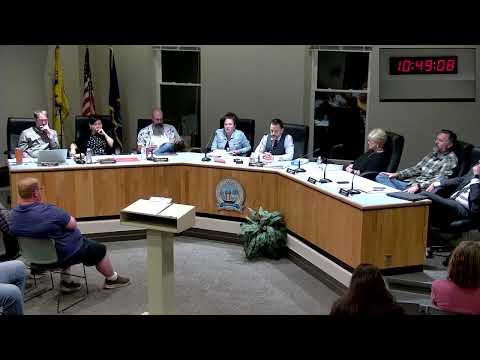
Lapeer commission adopts corrective findings against two members after months of disruption
Summary
The Lapeer City Commission voted to adopt corrective, record‑preserving findings against Commissioners Josh Atwood and Stephan Brady for repeated procedural conduct the majority said impeded meetings; both measures prompted extended debate over charter authority, due process and free‑speech concerns.
The Lapeer City Commission voted on June 15 to adopt corrective, record‑preserving findings against Commissioners Josh Atwood and Stephan Brady, declaring their recurring conduct at public meetings inconsistent with orderly procedure and directing preservation of transcripts and video for potential formal review.
Commissioner Mary Petri moved the Atwood finding, saying the June 1 meeting record showed Atwood "speaking without recognition, failing to confine remarks to the question at hand, making personal comments regarding the mayor's motives, and continuing to speak after repeated rulings of the chair." The motion noted those behaviors ‘‘correlate with Charter C‑6.6,’’ and although it was described as not a final adjudication of misconduct in office, the commission voted to preserve the record and warned repeated behavior could be referred to the city attorney. The vote carried with members Petri, McCarthy and Blissman in favor and Commissioner Brady opposed; Commissioner Atwood was disqualified from voting on the item under the charter provision that bars a member from voting on a matter concerning his own conduct.
A second motion, introduced by the mayor and supported by Petri, made similar record‑preserving findings for Commissioner Brady, saying the record reflected a "recurring pattern" of dilatory use of points of order, appeals and other parliamentary tools to obstruct business. The commission adopted that finding after debate; Brady voted no.
The measures produced lengthy debate on two fronts. Opponents of the motions, including Atwood and Brady, argued the actions were effectively substantive findings reached without the notice, hearing and evidence‑gathering procedures the charter prescribes for formal misconduct proceedings. Atwood said the commission lacked an express charter process to issue corrective findings and warned the new practice could chill legitimate parliamentary activity: "When the exercises of these rights becomes the basis for official findings, commissioners may begin to hesitate before questioning or expressing dissent," he said. Brady argued the motions went beyond record‑preservation to reach conclusions about motive and intent without independent review.
Supporters said the action was limited to preserving a contemporaneous record and warning that repeated patterns of disorderly conduct could be escalated to a formal charter process. Mayor Hing framed the items as "corrective and record‑preserving" measures within the commission’s authority to govern its own organization, rules and order of business. He also noted the commission's charter language that it "shall be the sole judge of the election and qualification of its own members, its own organization, rules, and order of business."
City Attorney Mark Francis told commissioners he had not prepared a full legal opinion in advance and that the motion's effect beyond record‑preservation — specifically whether it could trigger future misconduct proceedings and what procedural protections would apply — would require a more formal legal analysis.
The votes formalize a new step in Lapeer’s internal enforcement: the commission directed that the relevant transcript excerpts, video references and the corrective findings be preserved in the municipal record and warned that continued similar conduct may be referred to the city attorney for formal review under charter C‑6.6. Both Atwood and Brady objected that the actions set a precedent for judging ordinary parliamentary maneuvering.
The commission’s action does not remove either commissioner from office. The mayor and several commissioners said they hoped the step would reduce late‑night procedural interruptions so the body could focus on policy, though many public commenters and residents told the commission they feared the measures would chill dissent and debate. The commission gave no timeline for whether the city attorney will prepare the broader legal analysis that several members requested.
The commission adjourned after completing other business; the corrective findings themselves are preserved in the public meeting record and minutes.