Get Full Government Meeting Transcripts, Videos, & Alerts Forever!
Get email alerts on the Public Safety topic
No spam. Unsubscribe anytime.
After siren failures, chief briefs council on how Barberton’s warning system works and next steps for public notices
Summary
Council’s safety committee heard a technical briefing on March 26 siren failures: dispatch vendor notifications, radio gateway delays, manual vs. automatic activations by the National Weather Service, and recommended resident sign-up for Nixle; Chief Polacheck was assigned oversight of siren tech and communications follow-up.
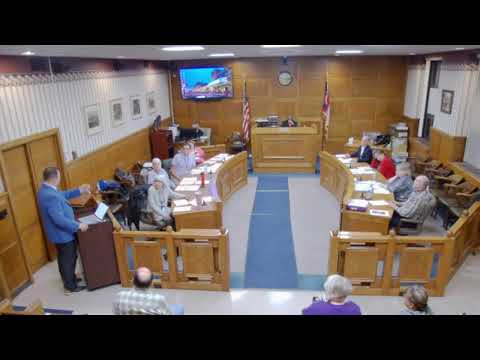
A special meeting of the Public Welfare, Safety and Public Relations committee on April 6 focused on tornado siren failures reported during a March weather event. Chief Polacheck gave a technical briefing on the city’s alerting architecture and answered council and resident questions.
According to the chief, the system’s control point is located at the Southwest dispatch center (referred to in the meeting as Swisscom). A delayed radio gateway delivery prevented full automatic operations; since the upgrade, dispatch can manually activate sirens, and the National Weather Service can still trigger automatic alerts for a broader county area. Polacheck said Swisscom notified partner cities on March 11 that the sirens were not in service, and the city then learned some sirens did not sound during the March 26 event.
Polacheck explained how residents receive alerts beyond sirens — text alerts via Nixle (text zip to 888777), NOAA weather radios, television/radio EAS, and wireless emergency alerts via cell carriers — and cautioned that sirens are designed primarily for outdoor notification and are not reliably heard indoors. He described tests showing the five sirens were functioning when checked on April 4 and at noon tests that followed.
Councilors and gallery speakers criticized the timing and public notification: several said they had not been alerted earlier that sirens were offline. Council members pushed for a clearer resident-notification plan and more active Nixle enrollment outreach. The committee agreed the fire/EMS chief (Chief Polacheck) will be the primary internal lead on siren technology and that staff will improve public communications about siren status and enrollment in digital alert systems.
What happens next: Chief Polacheck and staff will pursue follow-up with the dispatch center to confirm automatic gateway capabilities, prioritize Nixle enrollment outreach, and provide a report back to council on any system upgrades and a recommended communications plan.