Get Full Government Meeting Transcripts, Videos, & Alerts Forever!
Get email alerts on the Civility And Transparency topic
No spam. Unsubscribe anytime.
Watertown residents urge civility and transparency as public comments highlight alleged conflict in police negotiations
Summary
Residents used the public-participation period to call for civility, more transparent budgeting and to allege an appearance of conflict in police-contract talks; the town manager denied inserting himself into negotiations and asked that his memo and the town attorney's opinion be placed on the record.
Members of Watertown's public used the meeting's comment period to press the council on tone and transparency and to raise an appearance-of-conflict concern involving police contract talks.
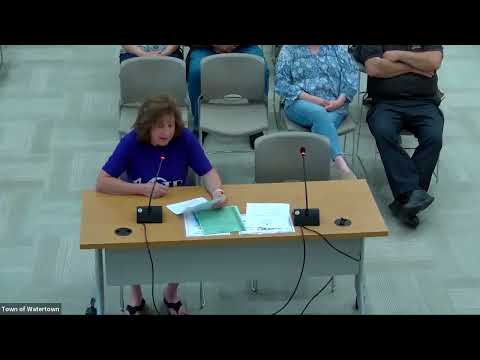
Resident Marian Rosa opened the public-comment block saying Watertown had "become vicious and nasty" and urging people to "put aside our personal differences" and treat others with "kindness." Christa Columba told the council meetings had grown "hostile, combative, and disrespectful," said residents had been subjected to slander and false statements by a council member and an RTC chair, and urged the council to recommit to professionalism. "Residents should never feel dismissed, ridiculed, [or] spoken down to," Columba said.
Other residents pressed for fiscal transparency and accountability. Janette Rodelli, a recent arrival, called for "full disclosure of financial accounts" and asked whether the town has a full-time treasurer. Barbara Zesky said she was concerned the town manager had "inserted himself into the negotiations of the Watertown Police Department" while his son serves as an officer in the union, saying that even an appearance of impropriety can erode trust. Zesky cited Connecticut General Statutes 1-85 and 7-148h when describing why officials should avoid participating where family ties create perceived conflicts.
The town manager responded during staff reports that he had not inserted himself into negotiations. "I at no time inserted myself into the negotiations," he said, adding that he had been asked by the town labor attorney whether he would be involved, declined because of a conflict, informed the council, and then sought guidance. He told the council he would place a memo describing his actions and the town attorney's written opinion into the record.
Council members pressed on process. One member said a formal vote or agenda item might have made the matter more transparent and given the public confidence in how many members supported the guidance; others said they preferred waiting for the governor's signed budget and official documentation before making binding decisions.
Why this matters: The comments highlight two interlocking concerns for local governance: civility in public debate, which speakers say affects trust in local institutions, and the need for clear procedures when personnel or family relationships intersect with official actions. The town manager's offer to place a memo and the town attorney's opinion in the public record sets up clear next steps the council can use to address the appearance-of-conflict allegation.
Next steps: The town manager requested his memo and the town attorney's opinion be added to the record; the council did not take a formal vote on removing or disciplining any official at the meeting. Several residents urged the council to study appointment processes and financial disclosures at future meetings.