Get Full Government Meeting Transcripts, Videos, & Alerts Forever!
Get email alerts on the Charter Review topic
No spam. Unsubscribe anytime.
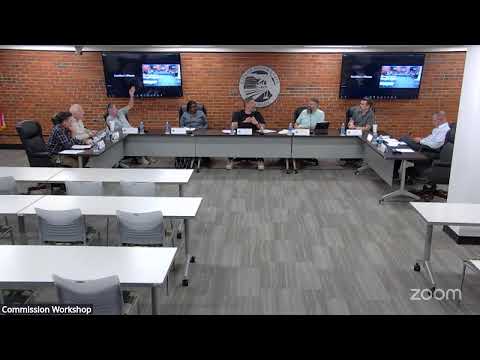
Panama City workshop reviews broad charter rewrite; elections timing, clerk oversight and agenda rules draw debate
Summary
At a June 15 charter workshop, Panama City commissioners reviewed proposed updates to the 1963 charter and heard Supervisor of Elections Nina Ward warn that final approved ballot language must reach her office by Aug. 24 for inclusion in the November 2026 election. Commissioners debated a single-question approach, clerk/CFO staffing changes, agenda-notice rules and residency requirements.
Panama City commissioners spent a June 15 workshop reviewing a comprehensive set of Charter Review Advisory Board recommendations to modernize the city's 1963 charter, with staff and the Supervisor of Elections laying out the legal and scheduling steps required to place amendments before voters.
Jonathan Hayes, who led the presentation, told the commission the advisory board's work was organized by theme and produced redline and clean copies of proposed charter language. Hayes said three of the five CRA members were attorneys and that the report includes background research from the Florida League of Cities and other statewide resources.
Nina Ward, Bay County's Supervisor of Elections, told commissioners that to make the November 2026 general-election ballot the city must deliver final amendment language and the appropriate resolutions to her office by noon on Monday, Aug. 24. Ward advised limiting the ballot to a short 75-word summary and using the state's printed referendum booklet and the city's website to provide the complete amendment text for voters.
Ward said, "You have 75 words or less. So that might be tricky to try to get all of this under one question," and recommended narrowing the package to avoid long ballot text and voter confusion. Commissioners discussed whether to combine all recommended changes into a single referendum question or to break them into multiple questions; several expressed a preference for one question to reduce voter fatigue.
Among the substantive items that drew sustained discussion were proposals to align municipal elections with state-wide cycles, changes to the clerk's office and finance oversight, and procedural rules for agenda setting. Commissioners debated moving municipal races to higher-turnout election years and extending terms: one staff summary said approval would shift some elections from the current off-year schedule to the next gubernatorial or presidential cycle, which would lengthen incumbents' current terms if voters approve.
The commission also examined a proposal to separate financial oversight from the city clerk role by placing finance functions under a CFO or comptroller and moving routine clerk duties to report to the city manager. That change prompted hiring concerns: commissioners pointed out the city is actively recruiting for a combined clerk/treasurer role and asked whether the city should re-advertise if the charter change is approved. A commissioner warned that advertising now for a single position could deter applicants for a pure finance role.
On the subject of contracts, commissioners questioned draft language stating the city attorney "shall prepare" all contracts, bonds and instruments. The discussion focused on whether the attorney must draft every contract or whether the attorney's office can reasonably review and sign preexisting templates and vendor-drafted agreements. Staff said the practical effect has long been that the attorney's office reviews and signs contracts; commissioners suggested clarifying wording from "shall prepare" to "review" or similar language.
A major procedural debate centered on proposed charter language requiring 48 hours' public notice for agenda items and limiting last-minute voting items. Commissioners expressed concern that rigid 48-hour rules might impede necessary emergency actions (for example, hurricane responses or time-sensitive grant resolutions) and that wording giving the mayor control over the agenda could be misused by a future occupant. Several commissioners recommended keeping detailed agenda mechanics in policy or ordinance rather than embedding them in the charter.
Residency provisions were also contested. The CRA draft included a six-month residency requirement for certain appointed officials, but commissioners questioned whether the charter should require city residency or allow Bay County residency or rely on contract provisions. Staff noted that charter language can be more restrictive than a contract but cannot be loosened by contract alone.
Commissioners reviewed other housekeeping and substantive changes, including codifying the city's graded pay system for employee compensation and clarifying language on who appoints or designates police and fire leadership. Staff explained the police/fire language was intended to preserve flexibility (allowing either commission or manager appointment) but commissioners requested clearer phrasing to reflect current practice and avoid ambiguity.
On jurisdictional matters, Caroline Smith, assistant city attorney, clarified that the city's charter boundary for waterways generally extends to the center of St. Andrews Bay, excluding the Intracoastal Waterway where the city does not claim authority. She said state agencies such as the Florida Fish and Wildlife Conservation Commission and federal authorities retain enforcement roles and the charter change is not intended to expand their powers.
No formal votes were taken at the workshop. Staff proposed bringing revised language back to a regular July meeting for first and second reading, with a projected timeline that would allow the commission to adopt referral ordinances and meet the Supervisor of Elections' filing deadline if the commission approves the final text. Commissioners asked staff to refine contested sections (agenda-setting language, residency wording, and contract-preparation phrasing) and to produce clear public-facing materials explaining the package before a referendum.
The commission's next procedural steps are expected to include additional drafting by staff, optional brief workshops or a policy/ordinance approach for agenda rules, and scheduling the referral ordinance for a future commission meeting so that final language can be submitted by the Aug. 24 deadline for the November 2026 ballot.