Get Full Government Meeting Transcripts, Videos, & Alerts Forever!
Get email alerts on the Battery Storage topic
No spam. Unsubscribe anytime.
Clean Capital and NO Energy pitch community battery project for Grand Island pumping-station site
Summary
A Clean Capital proposal, introduced by NO Energy, would place one or more 5 MW Tesla Megapack systems on town land near a National Grid substation; the company seeks a 120-day LOI to pursue interconnection and delineation work, with construction possible two years after approvals.
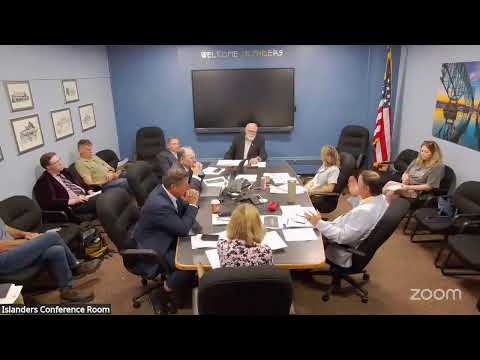
Michael Heley, vice president of NO Energy Corp, introduced a proposal from Clean Capital for a battery energy storage project on town-owned land on Grand Island and asked the board to consider a letter of intent that would let the developer apply to National Grid.
"We'd like to help the town make a little bit of money and support," Heley said in opening remarks, and he introduced Tim Schumer of Clean Capital to present the details. Schumer described Clean Capital as "effectively an infrastructure fund" that owns projects long term and has invested about $1.5 billion in roughly 500 megawatts across 27 states.
Schumer said the concept is similar to community solar but instead would store energy with large battery cabinets and sell electricity into the market, offering subscribers discounted energy. The company proposes using Tesla Megapack 2 XL cabinets; each system occupies about 10,000 square feet and, on the preferred site adjacent to a pumping station and National Grid substation, Clean Capital expects a single 5-megawatt system could be built now. "Today we could build one 5 megawatt project," Schumer said, adding that changes in the utility queue could permit up to six projects on the same hub in the future.
Schumer explained the technical and commercial steps: a developer must apply to National Grid for interconnection; publicly available hosting-capacity data is roughly "80% accurate," and interconnection studies are a multi-step process that can include a preliminary screening meeting and later a costlier, detailed study. He said most studies are paid by the proposing developer and estimated a preliminary utility screening can take 30–40 days while full studies take about 60 days. Because studies are expensive and nonreimbursable, Clean Capital seeks a 120-day exclusivity LOI from the town to justify proceeding.
Board members asked detailed questions about wetlands and permitting. Schumer acknowledged an "informational wetland" or drainage channel on the preferred parcel and said the developer would delineate wetlands as part of early due diligence and adjust the layout if required. He also noted that other developers may already be in the National Grid queue and that the queue position largely determines whether additional megawatts can be hosted.
On timing and lifetime, Schumer said cabinets are modular and batteries can be replaced; typical commercial lease terms are 25 years with options that can extend the partnership to roughly four decades. He estimated a year to clear interconnection screening, then a permitting and lease process that could lead to construction about two years after approvals, if all goes well.
Schumer and Heley offered to supply the full color presentation and a copy of the LOI with proposed commercial terms. They did not ask the board to take a binding vote at the meeting; instead, they requested direction on whether the town wishes to pursue an LOI to allow Clean Capital to begin interconnection work.
What's next: the board may request the LOI and supporting materials from Clean Capital for legal review and public information before deciding whether to grant the 120-day exclusivity to pursue an interconnection application. Any local lease, wetlands delineation, or interconnection work would precede formal approvals.