Get Full Government Meeting Transcripts, Videos, & Alerts Forever!
Get email alerts on the Foster Care Recruitment topic
No spam. Unsubscribe anytime.
Buncombe County urges more foster parents, highlights need for teens and sibling placements
Summary
Buncombe County children27s services staff and a longtime foster mother urged residents on the Tapped In radio program to consider fostering, citing a shortage of homes for teenagers and sibling groups and outlining training, supports and a contact number to get started.
Asheville, N.C. — Buncombe County children27s services staff and a longtime foster parent used a local radio program to urge residents to consider fostering, saying the county needs more homes for teenagers and sibling groups and offering training and community supports.
"There is a large need for teenagers," said Amy Huntsman, a social worker and supervisor in Buncombe County27s children27s services, explaining that communities often find it harder to place adolescents and sibling sets because many prospective foster parents start with a single child.
Huntsman walked listeners through how cases enter the foster-care system: most begin with a concerned citizen report to intake, followed by an investigation to determine whether family services or removal and foster placement are necessary. "Everything usually starts with a concerned citizen that's that's worried about a kid," she said.
The county emphasized that foster care is intended to be temporary and that the primary goal is reunification with parents, relatives or guardians when it is safe to do so. Huntsman noted that state law suggests a permanent placement should be identified within 12 months, but she cautioned that complex circumstances such as substance relapse or other traumas can extend that timeline.
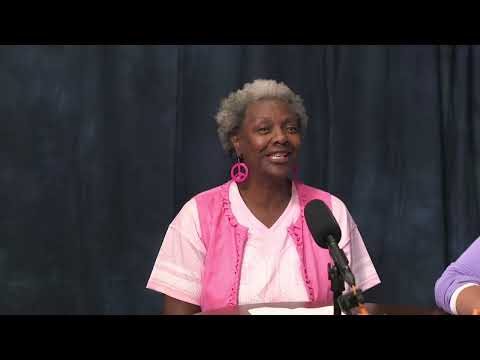
Personal stories were used to illustrate the work. Sandra Elliot, a Buncombe County foster mother who adopted two nephews after a family illness, described taking in children who had experienced multiple placements and the emotional regression children often show after moves. "When children come into my home, they want to be a big brother to them and share with them the love that they have," Elliot said, describing how stability and consistent care helped children improve.
Huntsman and Elliot described the characteristics county staff look for in foster parents: patience, compassion, a willingness to partner with biological parents when appropriate, and openness to diverse family makeups. Training covers how the child-welfare and court systems work, trauma-informed care and practical supports; Buncombe County runs classes that last about four to six weeks depending on scheduling.
Prospective foster parents were given a clear first step: call Buncombe County27s children27s services at 828-250-5868 to ask questions and sign up for training. The county also coordinates regular community events for foster families (including a park party with pizza, door prizes and games), and announced a school-supplies collection for foster youth planned for the last week of July in partnership with Buncombe County Libraries.
Huntsman said the county has ramped up "family finding" efforts in recent years to search for relatives across the country and internationally so children can stay connected to family when possible; she cited placements that have gone to relatives in places such as London and Alaska when appropriate.
The program noted there are multiple ways to support foster youth beyond becoming a licensed foster parent: donations, school-supplies drives, and serving as volunteer mentors or classroom-based "foster grandparent" volunteers through older-adult programs. For more information, Huntsman directed listeners to Buncombe County resources and reiterated the phone number for county children27s services.
The radio appearance closed with a reminder that fostering is a community effort and that training and county supports are available to help residents take that first step.