Get Full Government Meeting Transcripts, Videos, & Alerts Forever!
Get email alerts on the Municipal Budget Public Safety topic
No spam. Unsubscribe anytime.
Residents urge Lincoln council not to cut fire, EMS and police during 2027 budget hearing
Summary
At a public hearing on the proposed 2027 municipal budget, multiple residents, health-care leaders and emergency responders warned that cuts to fire, EMS and police staffing would increase response times, risk lives and reduce revenue generated by ambulance services; the council opened the hearing and took public testimony before continuing budget review.
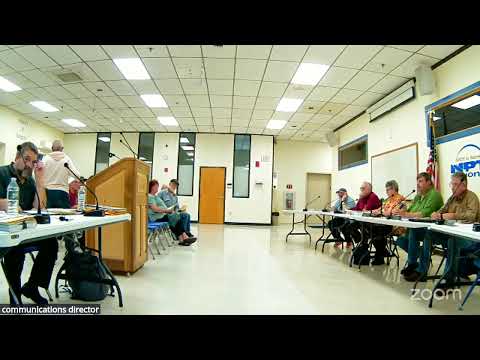
The Lincoln Town Council opened a public hearing on the proposed 2027 municipal budget and heard more than an hour of public comment urging the council to avoid cuts to fire, emergency medical services and police.
Ed Barber, a resident who said he is a part‑time employee of the town of Clarkstown, told the council: "Let's leave the budget where it is for now, and let's give Wayne some of the people he needs," arguing that the town needs a qualified treasurer and assessor and that trimming core services would harm residents and redevelopment efforts at the mill.
The hearing featured consistent warnings from health‑care and emergency‑service representatives. Lisa Veilleux, chief nursing officer at Penobscot Valley Hospital, said year‑to‑date her facility treated 149 patients who required transfer to higher‑level care and that "any reduction in staffing or funding would have a direct and significant impact on emergency medical response time, patient care, and the overall health and safety of residents across our service area." She noted the town’s coverage area spans about 76.8 square miles.
Several Lincoln residents described personal experiences to underline the risks. Al Traver recounted a hospitalization when both Lincoln ambulances were out of service and he waited hours for transport. Elise Chandler, identifying herself as the wife of a firefighter, said cutting positions would ‘‘directly impact and increase response times’’ and could deter future recruits.
Speakers also raised financial and transparency questions. One resident asked for a monthly accounting of a reported $21 million in grants the town has accepted, and several written submissions read aloud to the council claimed property taxes had risen ‘‘100% since 2020’’ and urged a forensic audit and clearer reporting of American Rescue Plan (ARPA) funds.
At least one public commenter and multiple speakers argued that fire and EMS generate revenue that helps offset their budgets. Erica Miller, a Lincoln taxpayer and employee of Penobscot Valley Hospital, cited estimates that Station 53 could collect about $783,000 in revenue in 2026 against a potential $2.1 million budget (about 38 percent), and said with additional higher‑level providers and resources that figure could rise toward 50 percent.
Council members and attendees asked technical questions about the revenue budget, including whether proposed fees (building‑permit or other changes) and a recently signed lease were reflected, whether $92,700 could be withdrawn from undesignated funds without verification of the fund balance, and whether anticipated airport grant funds were included in projections.
Procedurally, the council moved and seconded to open the public hearing on the proposed 2027 municipal budget; the motion passed unanimously, 5‑0, with the chair noting the hearing started at 6:50. The chair later closed the public hearing at 7:06 and the council continued department‑by‑department review of revenue and expense pages, with members and attendees identifying errors or mismatches on several budget pages.
The hearing brought repeated calls for the council to prioritize stability in back‑office functions—assessing, treasurer duties and auditing—before making substantial changes. Multiple speakers asked the council to preserve emergency services funding while seeking efficiencies elsewhere and to provide clearer, accessible documentation of grants, ARPA expenditures and the proposed mill rate before finalizing budget decisions.
The council did not take final votes on budget adoption during the hearing; members will resume review next week and are scheduled to consider the municipal budget in future sessions.