Get Full Government Meeting Transcripts, Videos, & Alerts Forever!
Get email alerts on the Telecommunications topic
No spam. Unsubscribe anytime.
West Fork council rejects Verizon lease for proposed downtown tower after months-long negotiations
Summary
After lengthy public comment about aesthetics, lease terms and service needs, the West Fork City Council voted to deny a proposed 25-year Verizon lease for a tower on city property, citing concerns about contract language, location and community impacts.
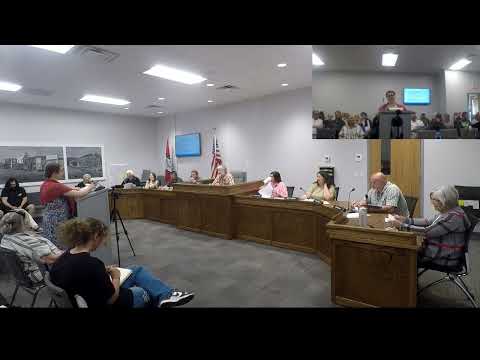
The West Fork City Council voted to deny a proposed Verizon lease for a communications site on city-owned land following more than an hour of public comment and council debate.
The mayor opened the discussion by rejecting claims that the city had hidden negotiations behind a nondisclosure agreement, saying, "There is no NDA agreement. That's not why you guys haven't heard about this," and explaining the issue dates back to negotiations beginning in 2020 and efforts to address Verizon service dead spots in town.
Residents who live near the proposed site urged the council to reject the contract as written. Bonnie St., who said she read the lease, told the council, "I really hope you'll vote against it in its current format. It seems like the way it's worded gives all the rights to Verizon and very few rights to the city of West Fork." She and other neighbors raised concerns about an industrial structure near downtown, potential flashing lights, and property-value effects.
A resident with telecom experience, Eene Wilson, told the council the city should account for hidden administrative costs, warning that "a $10,000 lease can become a net loss" once legal reviews, permitting and complaint handling are included. Wilson proposed community-driven revenue projects — including a pollinator festival — as an alternative way to raise local income.
City staff and volunteers said technical needs also informed negotiations. Isaac in public works said the city has "dead spots" that affect digital meters and the SCADA system for the water towers, which influenced the city's openness to a new site that would improve municipal communications.
A visiting industry speaker, Steve Green, clarified legal limits on local authority, saying the Telecommunications Act of 1996 prevents municipalities from denying a tower based on health or environmental concerns but that cities retain zoning and contractual tools to control siting and terms: "We can reject it because we don't like the contract. We can reject it because it doesn't fit in that area of town based on our zoning laws."
Council members debated whether to renegotiate the template lease, seek alternative locations, or deny the contract. After motions and multiple roll-call prompts, a motion "not to approve" the contract passed on recorded roll call. Individual council votes were read aloud during the meeting; the recorded roll-call readbacks in the transcript indicate six members voted in favor of denying the contract and one opposed, and the mayor summarized the result aloud for attendees.
The council did not approve the lease, leaving open the possibility of further negotiations or future proposals. The mayor said the council would continue to work within legal parameters and to consider community feedback when evaluating future proposals for communications infrastructure.