Get Full Government Meeting Transcripts, Videos, & Alerts Forever!
Get email alerts on the Zoning And Land Use topic
No spam. Unsubscribe anytime.
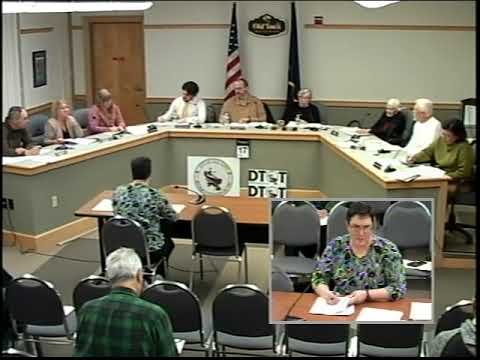
Oldtown council schedules second reading of revised chicken‑keeping ordinance after extensive debate and public comment
Summary
After a lengthy staff presentation, committee discussion and public comment, the council set a second reading and final vote for Dec. 1, 2025 to consider amendments to the city's proposed 'Keeping of Chickens' ordinance; the debate covered manure storage limits, allowable construction materials, motion‑activated lighting, setback rules and on‑lot slaughtering prohibitions.
City staff presented a revised draft of an amendment to Title 113 (Keeping of Chickens) on Nov. 17 and outlined planning board changes including raising allowed manure storage from 20 to 55 gallons and adding sections addressing illnesses, remediation and compliance with state and federal rules.
Travis, a city staff member involved in drafting the ordinance, said the text is based on model ordinances and is intended to balance residents’ desire for backyard poultry with public‑health and nuisance protections. “This is our best effort to try to lead with some understanding,” he said, noting enforcement would be complaint‑driven and rely on reasonableness and discretion.
Public commenters and councilors raised several concerns. John, a resident who identified himself as living on Bennock Road, urged flexibility on materials used to build hen houses and asked whether prohibitions on slaughtering on private lots would force residents to use commercial facilities. “If someone's got the wherewithal and can do that, again, I think we want to do everything we can to support people trying to feed themselves and their families within reason,” John said.
Staff and legal counsel responded that the ordinance’s material and light‑pollution provisions are intended to prevent nuisance conditions: the material standard targets structures that become dilapidated and allow predators in, while motion‑activated lighting was intended to limit prolonged night lighting in denser neighborhoods. Staff also noted that parts of the ordinance reflect state law and that portions could be challenged under home‑rule or food‑sovereignty arguments; the committee asked staff to refine language (for example, replacing a flat ban on 'scrap materials' with wording focused on materials 'sufficient to achieve the standards of this ordinance').
Council voted to schedule a second reading and final vote for Dec. 1, 2025, adopting the motion language 'as amended by the city council on Nov. 17, 2025' to permit wording changes before the second reading. Staff said further edits raised at the meeting could be incorporated prior to the Dec. 1 vote.
The decision moves the ordinance from planning‑board recommendation toward final council consideration with additional drafting directed by the council.