Get Full Government Meeting Transcripts, Videos, & Alerts Forever!
Get email alerts on the Service Territory Settlement topic
No spam. Unsubscribe anytime.
Siloam Springs board approves settlement clarifying electric service territory with Carol Electric
Summary
The Siloam Springs Board of Directors on Oct. 1 approved Resolution 39-25, endorsing a negotiated service-territory map with Carol Electric that exchanges roughly nine meters at no cost and authorizes the city administrator to make zero-customer boundary adjustments; the measure passed unanimously.
The Siloam Springs Board of Directors on Oct. 1 approved Resolution 39-25, adopting a negotiated boundary with Carol Electric that the board’s attorney and outside counsel said will settle a decades-long dispute over rural service territory.
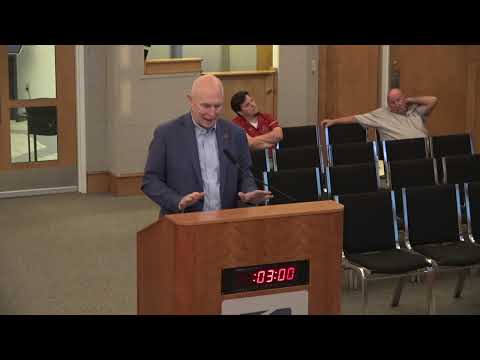
Jason Carter, general counsel for the Arkansas Municipal Power Association, told the board the city has provided municipal electric service since 1903 and that a 1939 line purporting to set rural territory was never filed with the Arkansas Public Service Commission (APSC). Carter said the APSC opened a new docket this year to determine which provider should serve the contested area and that the proposed settlement map was the result of negotiations with Carol Electric.
Why it matters: The resolution would fix ambiguous service lines around Siloam Springs, give the city control over areas where it will provide service and allow the administrator to clean up the map by trading customers on a zero-customer, zero-dollar basis. Carter said the settlement would swap about nine meters—"nine meters for nine meters"—with no net loss of customers to the city and that the change would not limit the city’s ability to grow by annexation.
Carter walked directors through the map packet: a yellow line showing the municipal boundary, a blue line representing the older 1939 rural-service area, and a red line showing the tentative boundary agreed with Carol Electric. He described places where the red line pulls back from the old blue boundary and other places where it extends beyond the blue line, producing both net gains and some concessions.
Statutory mechanics and costs: Carter recited statutory mechanics the city would use when annexing territory and acquiring service: after annexation the city should send notice to the incumbent utility, which triggers a six-month period for the utility to provide a buyout price; other statutory references noted in the presentation included a provision cited as 14207101 and a separate compensation formula cited as "104." Carter warned the board that a 355% multiplier used in compensation calculations can create large buyout figures but said the multiplier is easier to bear where the annexed land is wide open and expected to develop because new customers and infill can help recoup costs.
On acquiring infrastructure, Carter said cities sometimes buy existing lines, pay for required reconductoring or build parallel facilities and hook customers to municipal service; the choice depends on whether the incumbent lines are radial or pass through a new municipal area.
Safety and operational clarity: Carter said resolving unclear ownership along jagged boundaries improves safety and outage response, noting that misaligned service lines can create risks when crews work on lines believed to be de-energized. He also told the board that both sides had found historical incursions and that the settlement would resolve those issues.
Contentious claims and documentation: The resolution package notes that Carol Electric extended service into the city’s rural territory "235 times," a figure presented in the board materials. Carter described both parties as having negotiated in good faith toward the mapped boundary.
Board questions and next steps: Directors asked how annexations such as the planned expansion near Airport Road/Bill Young Road would be handled; Carter reiterated the statutory notice process and said the administrator could negotiate minor, zero-customer swaps with Carol Electric before the map becomes final so long as Carol agrees. Carter said he expects the APSC to approve the settlement, but phrased that as his assessment: "I believe the Arkansas Public Service Commission will approve of it," he said.
Vote: Phil asked for a motion to approve Resolution 39-25 with the administrator authorized to make map adjustments consistent with Exhibit A. A motion and second were recorded and a roll call vote returned recorded yes votes from Burns, Ristler, Allan and Carol; the motion carried.
The board adjourned after the vote. The immediate effect is the board’s approval of the settlement map and authorization for staff to pursue the agreed swaps and to transmit the settlement to the Arkansas Public Service Commission for final action.
Resolution and docket references in the meeting materials include Resolution 63-23 (prior action that prompted the original complaint), the APSC docket cited as 24066, and Resolution 39-25 approved Oct. 1, 2025.