Get Full Government Meeting Transcripts, Videos, & Alerts Forever!
Get email alerts on the Education Literacy topic
No spam. Unsubscribe anytime.
Thompson Primary teacher credits systematic instruction for large first‑grade reading gains; board adopts CKLA curriculum
Summary
A Thompson Primary reading interventionist told the Brush School District board that first‑grade literacy scores rose sharply this year; the board approved adoption of the Core Knowledge Language Arts (CKLA) K–5 curriculum and authorized funds for materials and professional development.
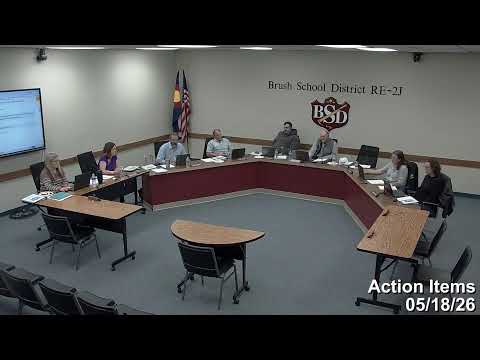
Laura Hansen, the reading interventionist at Thompson Primary, told the Brush School District RE2J board on May 18 that first‑grade literacy outcomes had improved markedly after a year of focused instruction. “My name is Laura Hansen and I am currently a reading interventionist at Thompson Primary,” she said, describing DIBELS/DIMEL screening results that showed a shift from large percentages of students flagged for intensive intervention to most students meeting benchmark.
Hansen said Thompson began the year with roughly 32% of students in the ‘red’ (intensive) category and 22% in ‘yellow,’ and ended the year with 13% red, 12% yellow and about 75% at benchmark or above. “I just think that is that just is an incredible amount of growth,” she said, as she credited a mix of systematic phonics, 160–180 minutes of daily language‑arts instruction, small‑group rotations, focused instructional time (“fit time”) and collaborative planning among teachers.
The presentation emphasized specific instructional practices aligned with the science of reading: systematic phonics and decoding instruction, decodable texts for practice, explicit guided practice followed by independent work, and frequent progress monitoring. Hansen also reported that nearly all students in the district’s reading intervention program moved off intensive plans; “we're sending zero students on from the reading intervention program of first grade onto second grade,” she said, noting some exceptions tied to recent moves and special‑education placements.
Why it matters: the superintendent and curriculum council said the results support a coordinated, district‑level approach to early literacy. The board subsequently voted to adopt the Core Knowledge Language Arts (CKLA) curriculum for K–5 instruction for a six‑year term and authorized expenditures tied to that adoption. The motion approved up to $218,000 for curriculum materials and up to $28,000 for professional development.
Board members and staff praised teachers’ work during the discussion and the curriculum council representative reported that pilot evaluations favored CKLA. The district also announced plans for a multi‑session professional development rollout (“digging into literacy”) to support classroom implementation.
The next steps: the board adopted the CKLA resource and approved related funding; staff will manage procurement and PD scheduling and report back as the materials are deployed and coaching is completed.