Get Full Government Meeting Transcripts, Videos, & Alerts Forever!
Get email alerts on the Health Care Hospital Oversight topic
No spam. Unsubscribe anytime.
Independent monitor finds Banner Wyoming Medical Center largely compliant but flags advisory-board engagement and some quality concerns
Summary
An independent monitor told the Natrona County commission that Banner Wyoming Medical Center met 13 of 17 post‑sale covenants for 2025, with three listed as partially met—largely because advisory‑board functions and community input remain incomplete. Commissioners pressed hospital leaders about individual patient safety complaints and asked for measurable action plans.
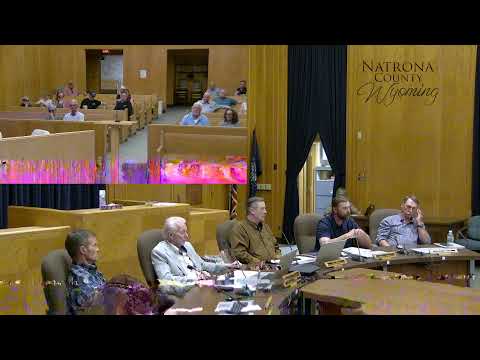
An independent monitoring team told the Natrona County Board of County Commissioners on June 16 that Banner Wyoming Medical Center satisfied most obligations from the hospital’s 2020 transaction covenants for calendar year 2025, but that several governance and engagement requirements remain only partially met.
Shannon Sumar, a partner with consulting firm PYA, said the review covered 17 covenant areas comprising about 74 discrete requirements. “For 2025, of the 17 covenants, 13 were fully met, three were partially met and one is not applicable because it’s a capital commitment that’s not due until 2026,” Sumar said. The partially met items centered on covenants 5, 11 and 14, PYA reported.
PYA identified the advisory board as the recurring deficiency across those covenants. Leanne Odum of PYA said information sharing from Banner to the advisory board has improved, but the board has not yet consistently gathered and channeled community input back into hospital decision‑making. “The advisory board is really charged with the role of gathering community input and then using that community input to interact with Banner Wyoming Medical Center,” Odum said, and PYA recommended more multimodal outreach and clearer, measurable tasks for the board.
PYA also reviewed capital commitments tied to the sale. Sumar said Banner must have dispersed at least $60 million by the end of 2026; the monitor counted a little over $2.6 million this year in expenditures captured as physician‑recruitment and strategic investments and reported roughly $44 million already dispersed to vendors. PYA said it will perform a detailed validation of the 60‑million requirement in next year’s review.
Commissioners pressed both the monitor and hospital leaders on concrete patient‑safety complaints raised by constituents. One commissioner described multiple anecdotes of poor care, including a case he said involved a patient dying after waiting in an entry area. PYA emphasized that its covenant review focuses on structure, policy and deployed processes—“tools and infrastructure” to support quality and patient safety—rather than individual peer‑review of clinical cases.
Banner representatives said they will take monitor recommendations seriously. Margot Carson, who represents Banner’s western region, said the hospital has translated the report into an action plan and will bring it to the advisory board to develop tactics and accountability. “We did work the action plan and it’s clear that we need to do a better job on engaging the community,” Carson said. Rachel Bryant, Banner Wyoming Medical Center’s chief operating officer and interim CEO, outlined ongoing renovations and capacity work—central utility plant updates, sterile‑processing upgrades, an ICU expansion from 14 to 20 beds and multiple imaging and outpatient renovations—saying those capital projects are part of the center’s effort to strengthen operations.
Phil Style, Banner’s chief medical officer, described personal outreach to patients who raise grievances. “Every time I receive a grievance, something goes wrong, a patient suffers harm or they’re unhappy with the care received … I invite them to my office. I listen to their story. I stay in touch with them,” he said, adding that leadership tracks incidents and conducts root‑cause analyses to prevent recurrence.
The commission asked that the trust, hospital and advisory board provide measurable action steps and periodic updates—30/60/90‑day milestones—so the board and the public can track whether advisory‑board engagement and local implementation of quality processes improve. PYA recommended documenting assignments and measurable timelines and said it will reassess the capital commitments and the remaining partial items during next year’s audit.
The county’s board did not take formal action on the PYA report at the meeting; commissioners and trust representatives agreed to follow up with the action‑plan materials and to keep the commission updated on measurable progress.