Get Full Government Meeting Transcripts, Videos, & Alerts Forever!
Get email alerts on the Strategic Planning topic
No spam. Unsubscribe anytime.
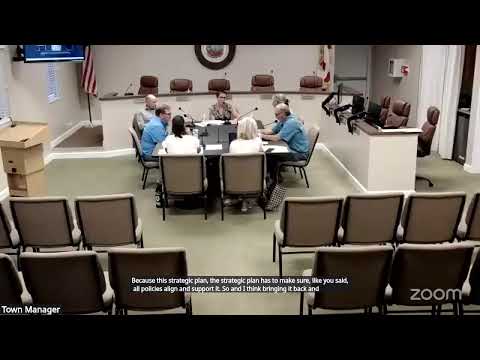
Loxahatchee Groves workshop centers on protecting rural character, stronger code enforcement and town identity
Summary
At a June 16 workshop, committee chairs and councilmembers prioritized preserving rural character — tree canopy, one dwelling per five acres, equestrian and agricultural uses — and proposed initiatives on town identity, conservation set-asides, trails, signage and grant-seeking for identity projects.
Town committee chairs and councilmembers spent the latter portion of the June 16 workshop defining "rural" for Loxahatchee Groves and identifying strategic pillars and initiatives to preserve the town’s low-density, agricultural and equestrian identity.
Committee members emphasized low-density land use (one dwelling unit per five acres), preservation of open and natural space, protection of tree canopy, and support for agriculture and equestrian uses. The group proposed strategic pillars including policy alignment across town codes, fiscal responsibility, infrastructure and drainage resiliency, public safety, and a stronger town identity expressed through consistent signage and design standards.
Why it matters: The workshop produced concrete ideas that could guide future ordinance updates and capital planning, from tree-protection measures to trails and gateway signage. Several speakers described recent incidents of tree removal and urged more proactive public education (fact sheets for new property owners, outreach to realtors) and firmer code enforcement to prevent unauthorized clearing of specimen trees.
Details and initiatives: Participants proposed a "rural identity and agricultural support" initiative (community events, agritourism, local-business incentives), a greenways and trails program, conservation set-asides or easements required of new development, and pursuing grants — including a $25,000 state art grant and technology platforms to promote local businesses and agritourism. The group also discussed traffic-calming options and canal guardrails as public-safety priorities.
Next steps: Staff will compile committee notes and return drafts of proposed pillars, code adjustments (Ultra-Local Development Code/ULDC issues such as tree protections and equestrian-estate guidelines), and funding options for council review and future agenda action.