Get Full Government Meeting Transcripts, Videos, & Alerts Forever!
Get email alerts on the Zoning Legalization 9600 Feral topic
No spam. Unsubscribe anytime.
Neighbors allege ongoing unpermitted activity as El Paso board legalizes portion of 9600 Feral with demolition condition
Summary
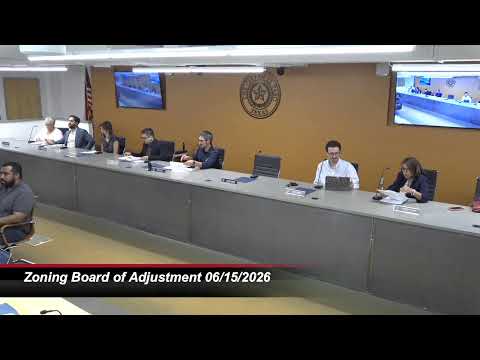
After lengthy public comment alleging parties, trash and repeated code complaints, the El Paso Zoning Board of Adjustment approved a special exception to legalize an existing portion of a residence at 9600 Feral on June 15, 2026, but required demolition or removal of accessory structures before any certificate of occupancy is issued.
The Zoning Board of Adjustment of the City of El Paso approved a special exception on June 15, 2026, to legalize an existing portion of a house at 9600 Feral, but added a condition that accessory structures identified for removal must be demolished or relocated before a certificate of occupancy will be issued.
The application sought Special Exception K, which applies to structures that have existed for 15 years or more. Planning staff told the board the red-marked portion of the home has evidence of long-term existence and recommended approval, while other accessory structures on the parcel were shown on site plans as to be removed or relocated.
Neighbors urged the board to deny or postpone the request, saying unpermitted activity at the property has persisted for years. Resident George Rodriguez Stoultz said the owners “do what they want and then they ask for permission,” and told the board he believed the property had been used for parties and events that disrupted adjacent residents. Another neighbor, Nancy Staltz, said the site has produced repeated calls to code enforcement and alleged fireworks and trash tied to weekend events.
Planning staff and the applicant’s representative, Vanessa Duran, said the owner plans to demolish noncompliant accessory structures and proceed with residential permits for the portion the owner wants to legalize. Staff reminded the board that zoning approval alone does not legalize a building for occupancy: the owner must submit building permits, pass inspections and receive a certificate of occupancy before the structure can be deemed lawful. Planning staff also noted that an approval from the board is valid for 12 months for permit activity.
Board members debated whether the board could require demolition before allowing any new permits; legal counsel and staff suggested a practical alternative tying demolition to the issuance of a certificate of occupancy. After a failed initial motion, the board approved the request with the amended condition that accessory structures identified for removal be demolished or relocated prior to issuance of any certificate of occupancy on the property.
The board’s action allows the owner to pursue building permits for the legalized portion, but it places demolition and final occupancy control in the permitting and inspection process. Code enforcement retains responsibility for investigating alleged ongoing uses that violate other land-use or public-safety ordinances.
The board’s decision followed extended public testimony and staff explanations of the permit and inspection process; the case was approved with the condition requiring demolition prior to a certificate of occupancy.