Get Full Government Meeting Transcripts, Videos, & Alerts Forever!
Get email alerts on the Municipal Budget topic
No spam. Unsubscribe anytime.
Village of Tequesta reviews draft 2026–27 budget as staff warns of $1.9M–$3.2M revenue hit under proposed property-tax change
Summary
At a June 15 budget workshop, Village of Tequesta staff recommended holding the millage at 6.4595 while outlining capital projects and reserve strategies after projecting a $1.9 million revenue loss in 2027 and $3.2 million in 2028 if a proposed expansion of the homestead exemption passes. Council directed staff to plan conservatively and delay major construction until the tax outcome is known.
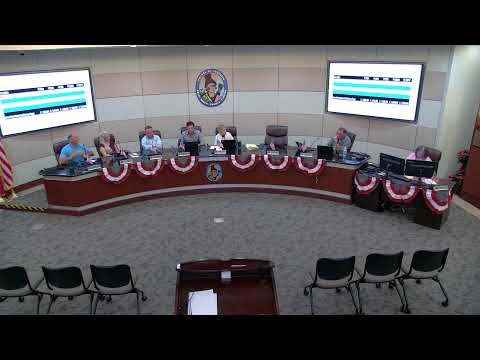
Village of Tequesta — At a June 15 budget workshop, municipal staff presented a draft fiscal year 2026–27 budget and urged the council to take a conservative posture in light of proposed changes to Florida’s homestead-exemption rules that staff projects would reduce village ad valorem revenues by about $1.9 million in 2027 and $3.2 million in 2028.
Jeremy (staff member) told the council the draft is “all-too-early” and depends on certified property values to be provided by the Palm Beach County property appraiser by July 1. He said staff recommends setting the maximum operating millage at the current rate, 6.4595, for the July filing but holding off on lowering the millage now because of uncertainty about the state proposal’s final impact.
Why it matters: The village gets roughly two-thirds of its revenue from property taxes, Jeremy said, leaving core services — police, fire and water — exposed to any large reduction in ad valorem receipts. Staff said 62–64% of the village budget is personnel costs and that debt service and public-safety spending are largely non-discretionary.
Budget highlights and major items: Staff walked the council through fund structure and planned spending. Notable items included: a $710,000 street program and $200,000 for sidewalks; a $570,000 allocation for Old Dixie beautification (staff said the budget includes $70,000 for planning and $500,000 estimated for construction and recommended delaying construction until the tax picture is clear); a $300,000 radio-system upgrade reserved in the capital plan; continued water system capital work (filtration rehab, reverse-osmosis membranes and main replacements) using a mix of SRF loans and grants; and a recommended vehicle-replacement program funded through an internal service fund.
On potential state changes, Jeremy summarized staff projections and the mechanism of the reform: “We’re expected to lose $1.9 million in 2027 and $3.2 million by 2028,” and staff estimates about 746 of the village’s roughly 3,400 properties could pay zero village taxes under the projected $250,000 homestead-exemption expansion. He cautioned council that assessment-growth caps and portability provisions in the proposal would slow ad valorem growth and could reduce revenue from commercial and new-construction assessments.
Options and council direction: Staff presented options to manage the risk: pause new recurring initiatives, prioritize one-time spending from reserves only where appropriate, consider non-ad valorem assessments (for example, a separate fire assessment), and pursue grants and shared-service opportunities. The presentation recommended setting aside unassigned funds rather than using the unassigned balance to lower millage in the coming year.
Council members thanked staff for a detailed presentation and broadly endorsed a cautious approach. Several members urged adding one-time funds to reserves, tightening hiring and examining shared services and non-ad valorem assessments as contingency measures. Council discussed connectivity and sidewalk priorities — including a Dover Road/Constitution Park connection — and emphasized drainage/swale work needed for some sidewalk projects before adding pavement.
Next steps: Staff said the property appraiser will certify taxable values by July 1, the council must set maximum millage and stormwater/solid-waste rates at the first July meeting for TRIM filing, and two public hearings on the millage are set for September. Staff recommended returning to council with a more complete budget after official ad valorem numbers are available and suggested delaying major construction contracts (Old Dixie) until after November’s property-tax developments.
Quotations from the workshop are taken verbatim from the staff presentation and council discussion. The workshop adjourned without public comment.