Get Full Government Meeting Transcripts, Videos, & Alerts Forever!
Get email alerts on the Homeless Shelter Ordinance topic
No spam. Unsubscribe anytime.
Planning board advances draft homeless-shelter and public-camping ordinance, narrows vetting requirement
Summary
The Scaggan Planning Board reviewed a draft ordinance that pairs a public-camping ban with licensing rules for homeless shelters; members agreed to forward the draft, as amended, to the select board—limiting enforcement to times when shelter space is available and revising a proposed police vetting provision.
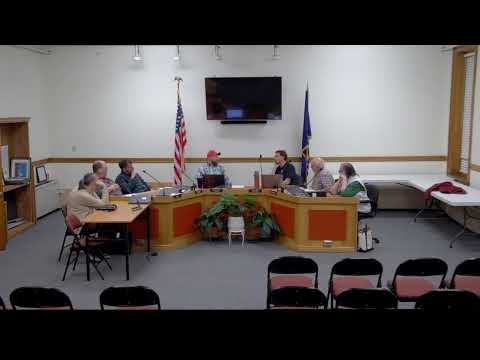
The Scaggan Planning Board on Monday opened a workshop on several ordinances and spent the bulk of its meeting vetting a draft homeless-shelter and public-camping ordinance, ultimately agreeing to forward the revised draft to the select board for further consideration.
The board’s chair opened the meeting at 6:00 p.m., confirmed a quorum and introduced the package of ordinances for workshop review. Planning staff said the draft was sent through Brian and combines a public-camping ban with a licensing regime for shelters, including provisions for occupancy limits, floor plans, security and sanitation standards.
Why it matters: Board members repeatedly cited a legal constraint described in the staff presentation — that municipalities cannot criminalize sleeping in public where there is no adequate shelter alternative — and asked staff to rephrase enforcement language so a ban could be applied only when shelter space is available within a reasonable transportation distance. Planning staff told the board they would revise the ordinance so enforcement depends on demonstrable available shelter capacity.
What the board debated: The discussion ranged across multiple operational and legal issues. Members questioned a broad definition of municipal property that would include parks and sidewalks; asked whether the ordinance’s licensing and inspection schedule (including proposed monthly inspections and submission of pest-control reports) was proportionate; and raised concerns that strict licensing could make shelters impractical in Scaggan. Board members also disagreed about a proposed separation requirement that would bar licensed shelters within 1,000 feet of schools or other shelters — some argued the buffer was excessive and recommended a variance pathway allowing case-by-case reductions.
The most contested section, identified in meeting minutes as Section 17, would have required owner-operators to submit staff and volunteer names for review by the Scaggan Police Department and could have authorized background checks. Several members warned this wording would both impose on private operators and potentially create town liability and resource burdens if the police department became the primary vetting authority. Others supported clear vetting standards and documentation as a community-safety measure. In response, the board directed staff to strike-or-replace the draft language with clearer alternatives: require shelters to perform background checks at their own cost, provide signed verification and a controlling-persons list, and allow the police department access for follow-up only where a specific public-safety concern is raised.
Quotations and attributions: The chair opened the meeting, saying, “Good evening. 6 o’clock we’ll bring this second meeting of the Scaggan Planning Board to order,” and later presided over the board’s hands-up consent to forward the draft. Planning staff summarized legal constraints and implementation options; members voiced concerns about enforcement scope and municipal oversight. A code enforcement officer present clarified that single-family homes used informally to house a person or family would not be treated as licensed facilities, while organized shelters and churches with different occupancy classifications would be.
Decisions and next steps: By consensus (hands raised and head nods recorded), the board approved forwarding the ordinance, as amended, to the select board. The amendments the board directed staff to make before transmission included: (1) language tying enforcement of the public-camping ban to demonstrable shelter availability; (2) clearer definitions of public spaces covered by the ban; (3) a revised Section 17 that places vetting responsibility and cost with the shelter operator while preserving town ability to review personnel information when public-safety concerns arise; and (4) a possible variance process for separation distances.
The board’s referral will be accompanied by staff notes and recommended redrafts; the select board will receive the packet for its next available agenda. The planning board asked staff to supply model language and examples (including a cited Lewon town approach to staff certification) when the packet goes forward.
Notes on evidence: The board’s discussion of legal limits on camping enforcement, the Section 17 vetting language, the 1,000-foot separation standard and monthly pest-inspection reporting were the primary substantive elements guiding the board’s instruction to staff. The transcript records the board’s consensus vote to forward the revised draft to the select board.
Ending: The board moved on to site-plan and other ordinance reviews after finalizing its direction on the homeless-shelter draft.