Get Full Government Meeting Transcripts, Videos, & Alerts Forever!
Get email alerts on the County Budget topic
No spam. Unsubscribe anytime.
Cheatham County budget committee recommends 5.67‑cent property tax increase to cover pay steps, COLA and contract increases
Summary
The county’s budget committee recommended a 5.67‑cent increase to the property tax rate — about $59 a year on the average Cheatham County home — to fund step increases, a 0.8% cost‑of‑living adjustment and rising uncontrollable costs including retirement and insurance.
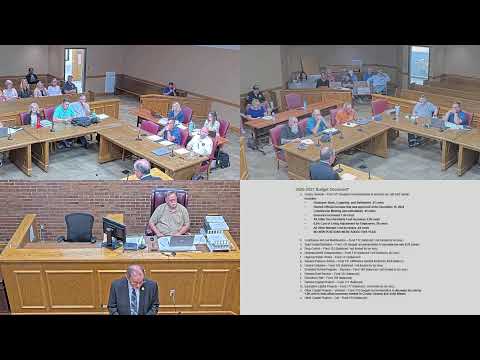
The Cheatham County Commission’s budget committee proposed a 5.67‑cent increase to the county property tax rate at a June 15, 2026, workshop, saying the change is needed to cover employee step increases, a 0.8% cost‑of‑living adjustment and several uncontrollable contract and retirement cost increases. The committee recommended moving the proposal to the full commission for consideration ahead of the June 30 legal deadline.
The committee said payroll alone — the 2% step progression from the county’s multi‑year salary study and an added 0.8% COLA to help keep pace with inflation — would cost about $834,598. “If you do the steps and you take care of the cola as far as inflation, you’re looking at a total of $834,597.79,” the presenter said. Committee members also flagged a state retirement employer contribution increase (from 6.77% to 7.66%) that adds roughly $160,411 to next year’s costs.
The budget presentation separated increases into categories: “brown” items (uncontrollable contract and utility increases, insurance and retirement) and “blue” items (new departmental requests). Department requests totaled about $2.6 million before cuts; the committee pared the new requests to approximately $165,000 (about 0.82 cents) by removing proposed recurring positions and other nonessential additions.
The package as presented would raise the county’s combined levy from about $1.753 to roughly $1.8097 per $100 assessed value. Under that levy the committee estimated an average Cheatham County home (market value cited at about $419,000) would pay roughly $59 more annually; a $250,000 property would see about $35 more a year.
The committee repeatedly emphasized preserving employee steps adopted in the county’s salary study and keeping a modest COLA to maintain competitiveness and retention. “I am requesting asking that we take care of our employees,” the presenter said, noting the long‑term cost of repeatedly delaying step progression.
Commissioners pressed staff on options to avoid any tax increase — a zero‑increase goal several commissioners voiced. Staff responded that eliminating the recommended increase without using fund balance would require cutting recurring positions or deep reductions in operating budgets and that achieving a true zero increase would likely necessitate eliminating multiple positions.
The presentation also outlined several department‑level adjustments the committee approved or cut, including leaving in a $12,000 pre‑exposure rabies vaccine program for animal control, trimming courthouse security new officer requests, and postponing 11 new jailer positions until facility timing is certain.
County staff reminded commissioners of the state requirement to adopt and file a budget by June 30; the committee urged the commission to either accept the recommendation, amend it on the floor, or present an alternative before the legal deadline.
The full commission will consider the committee’s recommendation in the next scheduled session. The budget committee emphasized the option to reduce the proposal by removing blue items first, but warned that removing step increases or the COLA would carry long‑term retention and pay equity costs.
Ending note: The workshop concluded with the committee asking commissioners to review the proposal and prepare for final votes before the statutory adoption deadline.