Get Full Government Meeting Transcripts, Videos, & Alerts Forever!
Get email alerts on the Permits topic
No spam. Unsubscribe anytime.
State review, public comments could delay wastewater discharge permit, project team says
Summary
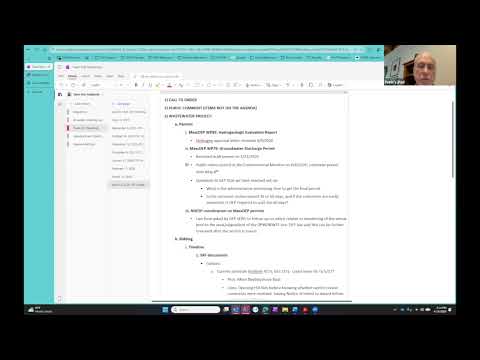
Project engineers said the HydroGeo approval has been received but the groundwater discharge permit — now in a 30-day public comment phase through May 8 — could trigger a further 60-day review if questions arrive, potentially delaying SRF authorization and bid milestones.
Project engineers said the project has secured a HydroGeo approval but remains dependent on a separate groundwater discharge permit that entered a 30-day public comment period and runs through May 8.
The permit team said the HydroGeo step was the ‘‘first step’’ and that the groundwater discharge draft carries a conservative loading rate of 5 gallons per day per square foot to speed initial approval. ‘‘The reason we went with five is because they told us that that's the fastest way to get through the permitting process and that's all we needed for phase one,’’ a project engineer said.
Why it matters: if any substantive public comment arrives during the 30-day window, staff said the state could invoke a further administrative review period that the team has described as 60 days in some past cases. Project staff reported mixed guidance from regional contacts and said they have repeatedly asked the Department's Southeast regional office (D South) for clarification about whether the full 60 days would be required and whether a rapid response from staff could shorten the review.
The team also described the technical path to raise permitted flows later: conduct stress testing on recharge beds, file an updated HydroGeo report and reapply to increase the groundwater discharge loading rate if monitoring shows the beds can accept higher flows. Engineers estimated the site soils and recharge design should be able to accept higher rates —‘‘certainly up to 10 gallons per day per square foot’’—unless mounding or sensitive receptor risks are identified.
Environmental monitoring and coordination: GHD’s monitoring plan calls for five wells (one upgradient, four downgradient) and staff said they will coordinate locations with Verdantis and other existing monitoring to collect baseline groundwater data before the plant goes online. The state asked the team to consult NISHAP about monitoring near a vernal pool; staff proposed drafting language, review by Jackie and Hillary, and involving Verdantis as needed.
What’s next: staff said they will follow up with Ian Jarvis at the D South regional office and reask outstanding questions about the administrative schedule so the permitting timeline can be integrated into the project’s bid and SRF authorization plan. If no comments arrive by May 8, engineers expect the state to move quickly toward a final permit; if comments arrive, the team said it must plan for additional review time and adjust the procurement schedule accordingly.