Get Full Government Meeting Transcripts, Videos, & Alerts Forever!
Get email alerts on the Municipal Finance topic
No spam. Unsubscribe anytime.
Greenwood finance director warns budget shortfall risk despite August sales-tax uptick
Summary
Finance staff told the council audits are nearly complete and August sales-and-use taxes rose 9.19% year over year, but Tom said timing of rebates and large prior-year audit adjustments leave the city with less than a 1% probability of hitting its budget target without stronger collections in remaining months.
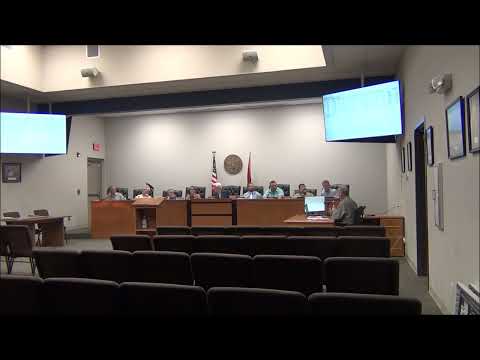
Tom, the city finance presenter, told the Greenwood City Council on Sept. 8 that auditors have finished fieldwork on the FY2024 legislative audit and that the water-sewer audit is about two-thirds complete. He framed the most immediate fiscal fact: “The August change over August was 9.19% positive,” a result he said was driven largely by timing of rebates and a large prior-year audit adjustment.
The uptick did not erase near-term concerns. Tom told the council that after adjusting for rebate timing and distributions, the city’s cumulative growth remains shallow and the city’s probability of meeting its adopted budget target is “less than a 1% probability” unless average monthly collections rise materially. He quantified the gap: the city would need an average collection of about $324,000 per remaining month versus a current monthly average near $294,000.
Why it matters: the council must plan how to reconcile capital spending, contingency reserves and operating needs if sales-tax collections fall short. Tom said cash-flow reductions in August produced a $746,000 month decline and a $1.2 million year-to-date decrease in cash; fund balances are down but remain within manageable ranges. The finance presentation included a 23.76% year-to-date capital spending rate and detailed how fixed components of water-sewer rate increases fund contingency reserves.
Council members pressed for detail on the audit schedule and on how rebates and large one-time adjustments distorted year-over-year comparisons. Tom said the FY2024 legislative audit final report should be issued in 30–45 days and will be presented to council when available.
On insurance costs, Tom outlined recent renewal increases across lines: equipment, property and deductible-buyback premiums rose, with the deductible-buyback increasing from roughly $47,000 in 2023 to $96,000 in 2025. To reduce exposure, staff proposed — and said water commissioners approved — removing $42.4 million of water/sewer-related property from the deductible buyback, retaining about $13 million of city properties (city hall, senior centers, fire stations, street shop) on the buyback. That decision will drop the water/sewer department’s buyback from $96,000 to approximately $18,000, yielding an immediate budgeted savings of roughly $77,000 that otherwise would have been charged to water/sewer operations.
Council reaction and next steps: members welcomed the clarity but asked for follow-up detail on timing and potential audit findings. Several members urged conservative planning given the still-weak multi-month trend. Tom committed to present the final legislative audit when issued, provide the detailed rebate reconciliation, and incorporate the insurance decision into the upcoming budget amendment process.