Get Full Government Meeting Transcripts, Videos, & Alerts Forever!
Get email alerts on the Dementia Services For Idd topic
No spam. Unsubscribe anytime.
Experts urge earlier screening and coordinated dementia supports for people with intellectual and developmental disabilities
Summary
Speakers at a National Alzheimer’s and Dementia Resource Center webinar, supported by the Administration for Community Living, urged earlier baseline assessments, use of IDD‑specific screening tools and better coordination between aging and disability services to identify and support people with IDD who develop dementia.
In a webinar hosted by the National Alzheimer's and Dementia Resource Center and supported by the Administration for Community Living (ACL), experts urged aging and disability service providers to adopt earlier, IDD‑specific dementia screening and closer coordination across systems to find and support people who are aging with intellectual and developmental disabilities.
Dr. Philip McCallion, professor and director of the School of Social Work at Temple University and a consultant to the resource center, said a 2019 estimate counted about 7.39 million people with intellectual and developmental disabilities and emphasized that most live at home rather than in institutional settings. "Brain health is as important for people with intellectual disabilities as it is for all of us," McCallion said, adding that many people with IDD are "hidden in the community" and may not be connected to services when symptoms first appear.
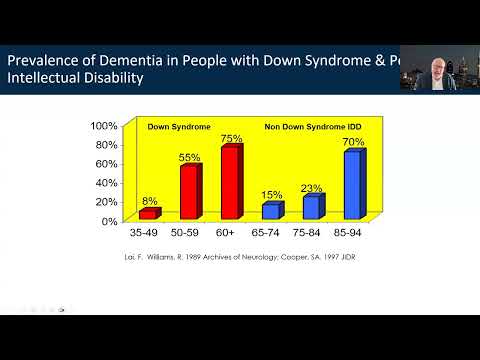
McCallion outlined a screening-to-diagnosis pathway and urged practitioners to measure change against each person's baseline rather than applying general‑population tests that can miss subtle declines. He highlighted the KAER framework (Know, Assess, Evaluate, Refer) and recommended tools described in the resource center's guide. For people with Down syndrome, he said, clinicians should be especially alert to earlier onset and reported that roughly 75% of people with Down syndrome age 60 and older show dementia‑level changes. On timelines, he said there is no single typical progression interval but suggested many moderate-to-severe courses fall in a roughly six-to-eight year range while acknowledging longer and shorter courses occur.
Amy Dewitt‑Smith, founder and executive director of Neighbor Network of Northern Nevada, focused on translating clinical identification into service design. She warned against treating dementia and disability supports as separate systems and described the resulting "ping pong" in which people fall through gaps between aging and disability services. "Specialized does not mean separate," she said, urging teams to adapt communication, routines and environments and to treat behavior as communication that may signal pain, triggers or other unmet needs.
Dewitt‑Smith walked through a six‑domain quick‑scan included in the guide — outreach and access; communication accommodations; behavior supports; meaningful engagement; caregiver partnership and planning; and coordination/referrals — and recommended three practical steps organizations can take within 30 days: run the six‑domain quick scan and pick one or two priority gaps per domain; adopt a single shared tool (for example, a behavior log) to improve consistency; and launch a three‑month training plan with monthly coaching touchpoints.
Both presenters recommended the NTG‑EDSD (National Task Group Early Detection Screen for Dementia) as a non‑diagnostic change questionnaire best completed by people who know the individual well. McCallion described how repeating the instrument over time helps reveal meaningful change; Dewitt‑Smith recommended starting screening around age 40 for people with IDD and repeating it annually, and suggested integrating the tool into intake and annual reviews.
During a closing Q&A, presenters pointed participants to training resources — Amy cited the Council on Quality and Leadership and University of Wisconsin materials for EDSD training — and advised clinicians to check clinicaltrials.gov for trials with trained assessment teams. The session closed with a reminder that the guide includes specific sections and appendices for assessment tools, behavior‑log templates and a training checklist. Sari Shuman, the webinar host, provided a contact email (nadrc-webinars@rti.org) and noted the next webinar date.
The presenters emphasized practical, evidence‑informed strategies rather than new mandates: build baselines early, use IDD‑appropriate screening instruments, document and share behavioral observations across teams, and create clear referral pathways between aging and disability services.