Get Full Government Meeting Transcripts, Videos, & Alerts Forever!
Get email alerts on the Budget topic
No spam. Unsubscribe anytime.
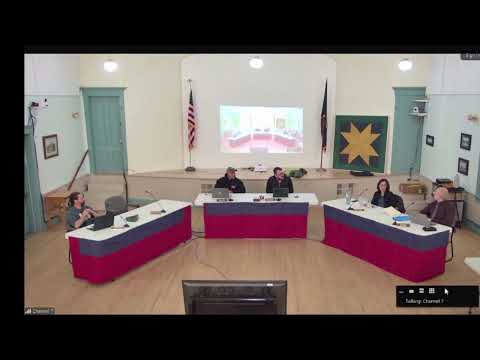
Readfield Select Board reviews draft FY27 budget after sharp ambulance cost increase
Summary
At its March 23 meeting the Readfield Select Board reviewed a draft fiscal 2027 budget that reflects a large jump in ambulance capital costs, discussed a tentative mill rate of 11.596, and weighed using reserves to soften an estimated 12.4% overall increase.
Readfield — The Readfield Select Board on March 23 reviewed a draft fiscal year 2027 budget that board members said includes a large, unexpected increase in ambulance capital costs and leaves uncertainty around energy and paving costs.
Board members discussed a line showing Winthrop Ambulance capital costs of roughly $135,000, about $60,000 higher than last year. Speakers said they have pressed the ambulance provider on the revenue formula, which heavily weights call volume, and argued the formula unfairly shifts costs onto lower‑density towns. The board said it would continue to press the provider and explore alternative vendors that offered daytime coverage and lower fees.
The board heard staff updates that the town’s best current estimate of its RSU (school district) assessment is about $4.7 million, a revision that modestly improved the town’s projection by roughly $3,000. A tentative mill rate of 11.596 was presented to the board; staff also flagged energy costs as a major unknown and proposed increasing fuel and heating lines by 50% as a precaution for budgeting purposes.
Members debated whether to proceed with planned paving projects this year given volatile prices. Bids commonly include fuel‑escalator clauses; the board discussed awarding work to contractors willing to hold a bid price or negotiating if bid results justify moving ahead.
Overall, presenters said the town’s combined increases — including RSU and county assessments and the ambulance cost spike — put the town in the double digits (about 12.4%), an impact the presenter estimated at roughly $90 per average household. Board members discussed reserves and savings as a potential short‑term mitigation but were cautious about drawing extensively on reserves this year.
The board directed staff to recheck department budgets, notably the transfer station, and said it will vote on a final draft at the next meeting.
Quotes in this article are attributed to speakers recorded in the meeting transcript.