Get Full Government Meeting Transcripts, Videos, & Alerts Forever!
Get email alerts on the Historic Preservation Easements topic
No spam. Unsubscribe anytime.
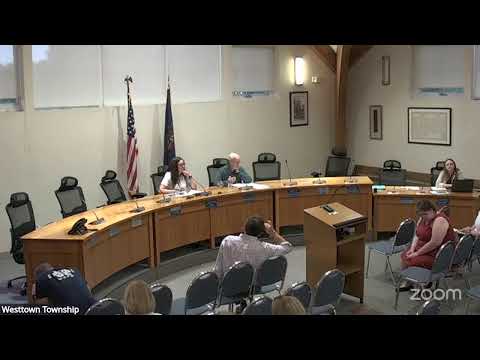
Westtown supervisors hear Preservation Alliance briefing on easements as township readies historic property for auction
Summary
At a June 15 workshop, the Preservation Alliance for Greater Philadelphia explained how preservation easements work—what they protect, donor costs, monitoring and modification—and residents urged the township to consider placing an easement on a historic property before it is auctioned.
Jennifer Robinson, director of preservation services for the Preservation Alliance for Greater Philadelphia, told the Westtown Township Board of Supervisors on June 15 that a preservation easement is "a voluntary legal agreement" that "runs with the land" and can protect a property's historic exterior and other specified features in perpetuity.
Robinson presented how easements are documented, monitored and enforced by qualified organizations. She said baseline photographs and a written condition report are recorded with the deed, a detailed legal easement agreement is drafted for each property, and the easement holder generally performs monitoring visits annually or every two years and follows up on maintenance concerns.
The Alliance requires that an easement-holding organization be IRS-qualified (Robinson noted the group's 501(c)(3) status) because some donors seek federal tax deductions. Robinson said donors typically pay an initial deposit (she described a common range of $2,500–$5,000 to begin legal work) and a negotiated donation at signing to support monitoring and legal defense; owners are usually responsible for their own legal fees and appraisals if pursuing a tax-deductible gift.
Board members and attendees asked practical questions about scope, timelines and cost. Robinson said most Alliance easements cover the full exterior and parcel open space but can be customized at the donor's request to include specific interior elements or allow limited, defined additions. She said realistic restoration timelines commonly range from about two to five years for work that affects the building's integrity, such as securing roofs and repairing masonry, and the Alliance is generally flexible when owners communicate progress.
Robinson described rare circumstances for easement modification, including a court-approved change after a near-total fire that converted the site to protected open space, and a modification that bifurcated a farmstead parcel so neighbors no longer required mutual approvals. She emphasized that life-safety and ADA requirements would be written into easements where needed.
Several members of the public urged the supervisors to protect the facade of the historic building the township plans to auction. Adam Cap, a township resident and member of the EAC, said he and his family "support, our family support for if there is a way to to have some kind of easement on this building" and cited the area's serpentine stone character as a community asset.
A public commenter asked whether the municipality must auction the property; a supervisor replied that "the only way we can sell it by Pennsylvania law is by auction," and explained the township's stated rationale: reducing real-estate holdings that the municipality does not need and that represent ongoing costs to taxpayers. Several attendees responded that auctioning the property and allowing private ownership could conflict with the property's historic and community value.
Robinson encouraged the township or a prospective donor to engage early: easements can and often should be put in place before a public sale to provide full disclosure to buyers, and custom language can preserve eligibility for historic tax credits or build in flexibility where appropriate.
The workshop did not include a formal vote. Supervisors indicated the decision about sale timing and whether to pursue an easement would proceed as part of the township's sale process and subsequent meetings.