Get Full Government Meeting Transcripts, Videos, & Alerts Forever!
Get email alerts on the Airport Infrastructure topic
No spam. Unsubscribe anytime.
Prescow advances airport EAS review process and funds engineering for ARF/SRE building design
Summary
Council authorized staff to follow a joint‑session procedure for Essential Air Service recommendations and approved procurement of engineering and pursuit of FAA/MDOT funding to complete design/permitting for an aircraft‑rescue and snow‑removal building expansion; staff said the estimated design/construction cost is about $8.3M and FAA funding could cover ~95% if the project remains FAA‑eligible.
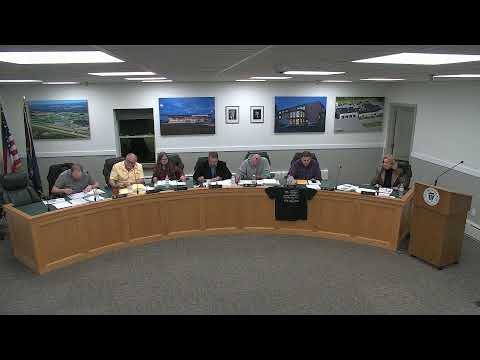
At an extended presentation, the Airport Advisory Board chair and airport staff laid out two related items: a recommended joint‑session process to evaluate Essential Air Service (EAS) proposals, and a staged plan to design and permit an Aircraft Rescue & Firefighting (ARF) / Snow Removal Equipment (SRE) building expansion.
Granville Junior Lamb, chair of the Airport Advisory Board, proposed a timeline in which advisory members review proposals promptly after the bid close, then the council and advisory board meet jointly (publicly) so airlines can present, an independent air‑service consultant can give analysis, the public can comment, and the council can deliberate before sending a recommendation to U.S. DOT. Council voted to authorize the city manager and airport director to follow the recommended EAS process.
Airport staff then described the ARF/SRE expansion need: existing bays lack FAA‑recommended clearances for the airport’s index‑B rescue vehicle and some snow‑removal units are currently stored in unheated space. Staff cited FAA advisory circulars and the airport master plan (2020). Engineers provided an early total project estimate of about $8.3 million (design/permit/bid $800,000; phased construction approximately $4.5M + $3.0M). Staff explained the typical funding model: if the project remains fully FAA‑eligible, the FAA would fund about 95% (~$7.8M), Maine DOT would cover ~2.5%, and the airport would provide a local match (~2.5%) from passenger facility charges (not local property tax).
Council discussed timing and risk: staff said operational changes and airline expectations since 2016 increased equipment needs; failing to act risks FAA enforcement or operational constraints, while building carries the usual procurement and community‑perception risks. After Q&A, Councilor Herman moved (second Craig) to authorize the city manager and airport director to procure the engineering services firm identified in the memo (Hoy/Tanner Associates named in motion) and to pursue FAA and MDOT funding to complete the design/permit/bid phases for the ARF/SRE expansion; council approved the procurement motion limited to the design/permitting phase.
Staff noted next steps: if council proceeds, the city would execute a design contract, obtain an independent cost estimate, and submit grant applications; FAA grant awards are based on documented procurement and bid results, and any change in scope or cost would be processed through FAA/MDOT grant procedures.
Why it matters: staff emphasized that the project would address firefighter and airfield operations safety and that keeping the project FAA‑eligible is essential to securing the large federal share.