Get Full Government Meeting Transcripts, Videos, & Alerts Forever!
Get email alerts on the Privacy And Surveillance topic
No spam. Unsubscribe anytime.
Missoula council delays parks security camera contract amid privacy concerns
Summary
After public and council questions about facial recognition and data policy, Missoula City Council postponed a $366,391 contract for park security camera upgrades to June 22 so staff can provide technical details and binding safeguards.
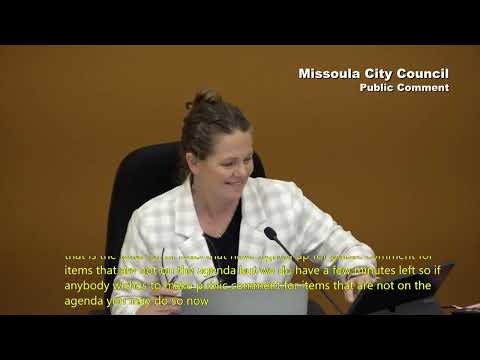
Missoula City Council on June 15 postponed action on a $366,391 contract to upgrade security cameras at city park facilities after residents raised privacy and legal concerns about the technology’s potential facial-recognition and license-plate–reading capabilities.
The contract — listed in the consent agenda as procurement for camera upgrades at Splash Montana, Currents Aquatic Center, Mobash Skate Park and Fort Missoula Regional Park — was moved from the consent agenda to regular business after council members requested additional technical information. Chief Administrative Officer Dale BL told council the purchase is primarily for hardware replacement and expansion and that the bid deadline is June 30, but he acknowledged staff earlier were not at the meeting to provide detailed technical answers.
Why it matters: Residents and privacy advocates said the city is buying cameras whose hardware can support intrusive analytics even if the initial purchase does not include software for facial recognition or automatic plate reading. They urged binding contractual or ordinance-level limits on future activation of such features; staff and some councilors said the upgrade replaces aging equipment needed to protect facilities and evidence of vandalism.
"Any anything with a lens has the hardware to engage in a facial recognition," said Lucas Moody (Ward 1), who urged the council to reject the contract or return it to committee until retention, activation and oversight safeguards are in place. Nathan Stevens (Ward 4) added, "Montana law already bans continuous real-time facial recognition in public spaces," and said a staff promise is not enough without contractual limits.
Staff response: CAO Dale BL and Public Works staff said the city is purchasing hardware and not activating AI analytics as part of this procurement. "This is the hardware purchase. It's not for the AI software," Dale BL said, adding that the data would be city-owned and used for traditional security and incident evidence. Eric Holstrren, the city's chief operations officer, said the city has a staff guideline created about 18 months ago that places limits on AI use by staff but does not yet constitute a comprehensive citywide AI-camera policy.
Council outcome: After extended council debate about technical capabilities, legal risk under the Montana Constitution, and the practical need to replace aging cameras cited by staff and some residents, President Nent proposed and the council agreed without objection to postpone consideration until the public hearing scheduled June 22 so staff can bring subject-matter experts, clarify whether contractual language can prohibit activation of advanced analytics, and confirm retention and access policies.
What’s next: The item will return to the council agenda on June 22 for a public hearing and final action. Councilors requested that staff pursue explicit opt-out language for facial-recognition and license-plate–reading features and report back with technical details on how those features could be activated or disabled.