Get Full Government Meeting Transcripts, Videos, & Alerts Forever!
Get email alerts on the Zoning Variance topic
No spam. Unsubscribe anytime.
Council approves setbacks variance for 10 income‑based elderly duplexes awarded state tax credits
Summary
The Vermillion City Council approved two zoning variances June 15 to allow construction of 10 income‑based duplexes for elderly residents, reducing the rear-yard setback from 25 to 22 feet and side-yard setbacks from 15 to 14 feet; staff said the project has South Dakota Housing and Development tax credits.
The Vermillion City Council voted June 15 to grant two zoning variances needed for construction of 10 income‑based duplexes intended for elderly tenants.
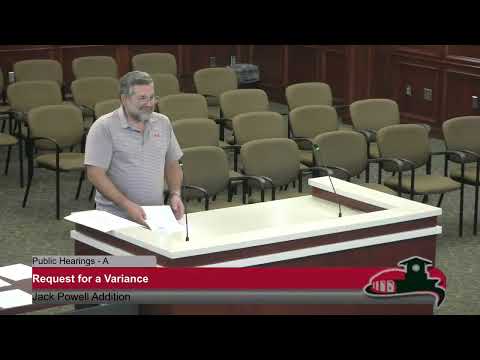
City planning staff told the council that the petition, submitted May 4, would reduce the rear-yard setback from 25 feet to 22 feet and the side-yard setback from 15 feet to 14 feet for lots in the Jack Paul Addition (Lots 6A–15A, Block 4). Staff also said the project has been awarded tax credits by South Dakota Housing and Development and recommended approval of the variances. “Staff would recommend approval of the variance to decrease both setbacks,” planning staff member Jose said during the public hearing.
Council discussion centered on lot size and how the duplexes fit the existing platted lots. Councilor Weber asked whether the planned buildings were larger than the original lots; staff explained the developer combined some lots to reach the desired footprint. Councilor Tallers moved to approve the variances; Council Merrow seconded and the motion carried by voice vote. The transcript does not record a roll-call tally for the variance vote.
The record before the council identified the housing as an income‑based project for the elderly and said the developer had built similar housing elsewhere without the need for variances; in Vermillion, staff said the parcel dimensions and zoning necessitated the setback adjustments. The council noted that a two‑thirds favorable vote (six of nine members) is required for a variance under city rules; staff said the board voted in favor and the chair declared the motion carried.
What happens next: with the variance approved the applicant may proceed with the site plan as presented to staff, subject to any building‑permit review and conditions described in the staff memo. The council did not record additional conditions on the record at the meeting.