Get Full Government Meeting Transcripts, Videos, & Alerts Forever!
Get email alerts on the Housing Growth Law topic
No spam. Unsubscribe anytime.
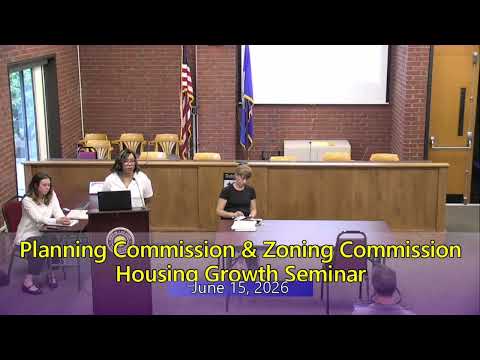
SECOG tells East Lyme leaders and residents how new state housing law will change local zoning and planning
Summary
Southeastern Connecticut Council of Governments staff briefed East Lyme on Public Act 25-1’s requirements — mandatory zoning revisions (summary review and middle‑housing/mixed‑use in commercial zones), a housing‑growth plan due to OPM, and state incentives — and answered questions about water, parking and property values.
Felicia Adams, regional housing planner with the Southeastern Connecticut Council of Governments, told East Lyme officials and residents that Connecticut’s new housing law requires two main municipal actions: changes to local zoning and adoption of a housing growth plan (or opting into a regional plan). “My name is Felicia Adams. I am the regional housing planner with the Southeastern Connecticut Council of Governments,” she said at the start of a public briefing.
The briefing described statutory timelines and technical steps for towns. SECOG staff said zoning revisions tied to the law must be in place by July 2026, municipalities must decide whether to prepare a local housing growth plan or join the regional plan by July 1, 2027, and whichever path they choose the plan must be submitted to the Office of Policy and Management by June 1, 2028. Amanda Kennedy, SECOG’s executive director, reassured the room that towns should move promptly but not panic: “there’s not like someone from the state that’s going to come down and say, ‘You didn’t meet the deadline,’” she said, noting missed deadlines create vulnerability in local codes rather than an immediate state enforcement action.
Why it matters: the law aims to reduce regulatory barriers to housing by requiring municipalities to allow certain housing types and to plan for needed infrastructure. The statute asks towns to permit “middle housing” (generally 2–9 unit residential buildings) or mixed‑use development on land zoned commercial or mixed‑use, and to route qualifying applications through a streamlined “summary review” process that limits discretionary hearings. SECOG staff emphasized summary review will still allow objective determinations about substantial public‑health and safety impacts, so towns should adopt clear, objective design standards now to guide approvals and reduce legal uncertainty.
What SECOG presented and local concerns: staff walked through regional charts showing slow housing production, low active listing rates in Connecticut, and housing‑cost burdens for many households. They said East Lyme’s data show an increase in household counts but mixed population trends and that portions of the community pay high shares of income for housing. Presenters explained the housing‑growth plan must identify specific zones or parcels that could meet an affordable‑housing goal via summary review and must also document infrastructure investments (water, sewer, roads) needed to support development.
Residents pressed on several practical issues. Multiple participants asked how local water and wastewater moratoria or limited sewer capacity would affect summary review approvals; SECOG staff replied that public‑health codes and infrastructure constraints remain in force and that insufficient capacity would be a valid basis to determine a significant health or safety impact under summary review. On parking, staff said the statute generally prohibits municipal minimum parking requirements except for developments with 17 or more units, but market forces and site constraints typically push developers to include parking; SECOG also described a traffic‑mitigation district option (limited to a total of 8% of municipal land) where a town could keep parking minimums in designated areas.
Participants also raised property‑value concerns and public‑hearing access. One attendee noted the zoning board’s charge to protect property values; staff advised that towns rely on objective design standards (setbacks, facade treatments, materials, glazing percentages) rather than subjective evaluations of character. Several residents said removing public hearings worries them; staff said that while summary review limits discretionary hearings, towns can preserve robust local engagement through plan adoption steps, design standards and other procedural tools.
Incentives and funding: SECOG described incentive programs created by the statute. Municipalities that complete a housing‑growth plan become eligible for low‑interest loans for water‑quality (sewer) projects. Additional incentives — including housing‑growth grants and higher school‑construction reimbursement percentages — are tied to extra actions such as adopting a transit‑oriented district or pursuing a Connecticut Municipal Development Authority (CMDA) development designation. Staff cautioned many program details remain to be defined by state agencies but advised towns to document infrastructure needs and implementation steps in their plans.
Barriers beyond zoning: SECOG stressed that zoning is only one barrier. Presenters and attendees discussed building‑code thresholds (which can shift projects from residential to commercial code), financing challenges that make 'middle housing' hard to “pencil out,” and the need for new wastewater approaches in areas without sewer. SECOG said the regional plan will flag non‑zoning barriers and will include outreach to builders and code stakeholders.
Next steps: SECOG told East Lyme it plans two more local meetings before the July 2027 decision point — one fall session focused on East Lyme’s housing stock and a later meeting to present draft affordable‑housing goals and methodology. Staff offered to provide standard reporting templates for annual tracking and said adoption of a local plan requires both planning‑commission review and the chief executive’s sign-off.
The presentation closed with staff urging continued local engagement as SECOG drafts regional recommendations and town‑specific chapters. SECOG emphasized the process is intended to be transparent and iterative; towns retain local control over where commercial and mixed‑use zones are located, even as they align local regulations with the statute’s requirements.