Get Full Government Meeting Transcripts, Videos, & Alerts Forever!
Get email alerts on the District Budget Staffing topic
No spam. Unsubscribe anytime.
RSU 11/MSAD 11 committee advances staffing plan tied to ESSA allocations
Summary
The RSU 11/MSAD 11 curriculum committee reviewed preliminary ESSA Title allocations and unanimously voted to advance a staffing plan (Option A) shifting some EdTech positions toward teacher‑certified literacy specialists; the director will return with achievement data in June.
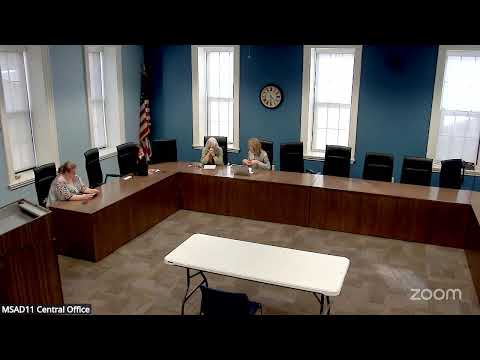
On May 5, 2026, the RSU 11/MSAD 11 curriculum committee reviewed preliminary federal ESSA allocations and voted to advance a staffing proposal to the full school board that would shift some EdTech positions into teacher‑certified literacy specialist roles.
Angela Hardy, director of curriculum, told the committee Title I funding was “pretty much flat‑funded” this year and reported a Title I allocation of $539,575.78. Across ESSA Titles the district faces a modest net shortfall (Hardy summarized the overall year‑to‑year change as a deficit of about $9,956.98), which she said requires caution because most federal dollars in the district pay for salaries and benefits.
Hardy said Title II funding declined (she cited a loss of about $14,943.76 to an allocation of $116,638.34) while Title V — the district’s most flexible federal source — rose (reported increase about $5,987.24 to $14,968.97). For the first time the district also received a small Title III allocation (multilingual learners) of $1,420.29; Hardy said she would study Title III rules and return with a plan for that money at a later meeting.
Hardy explained required Title I compliance items, including a 1% set‑aside for family engagement (used for evening family events, materials and compensating staff for out‑of‑contract time) and the federal “comparability” obligations that drove how the district provides services at non‑Title I schools such as Helen Thompson. She described typical uses — literacy and math interventionists, supplies for family nights and contracted presenters — and said the district often shifts smaller Title IV allocations into Title V to create more useful grants.
The primary substantive decision centered on staffing. Hardy proposed using an opening created by a Riverview retirement (and a current long‑term substitute placement) to hire teacher‑certified literacy specialists at Riverview, LER and Helen Thompson rather than maintaining two EdTech 3 positions at each site. Hardy argued literacy specialists provide scheduling flexibility, leadership and coaching that reduce training burden and improve consistency; she also noted a sizable training curve for EdTech staff who take on many teacher‑like responsibilities.
Using conservative, high‑end salary and benefit assumptions, Hardy presented Option A and Option B budget scenarios. Under the high‑end assumptions Option A produced a modest projected deficit (Hardy cited a gap in the low‑to‑mid four‑figures — she referenced roughly $12,937 in one scenario) but said she was confident that final bargaining outcomes, hiring choices (salary step and health insurance selections) and some internal adjustments could close the gap without harming existing staff. She told the committee she had built “safety” reserves so the district would not commit to staffing it could not afford.
Hardy also explained the federal/state rank‑and‑distribution calculation that determines where Title I funds must be spent (a formula based on school need and student counts), noting those calculations limit how freely federal dollars can be reallocated between schools. Committee members raised equity concerns — especially that Pittston does not currently have a teacher‑literacy specialist while Riverview and LER would under the proposal — and Hardy agreed to revisit placement decisions after the district’s June achievement data are finalized.
On associated programming, Hardy said the district would use Title II to fund contracts for MTSS training and leadership coaching with the Great Schools Partnership and planned a district‑wide writing initiative for grades 6–12. She also described shifting coaches’ professional learning from the local budget into allowable federal Title II spending to ease local budget pressure.
After discussion the committee voted to advance Hardy’s Option A staffing recommendation to the full school board for action. The committee asked Hardy to return on the second Tuesday in June with achievement data and a staffing/funding update; the committee set its next meeting for June 9 at 3:30 p.m.
The committee’s action is a recommendation to the full school board, not a final hiring decision. Hardy said she will refine salary/benefit estimates with district finance staff and post positions once the committee’s direction is finalized.