Get Full Government Meeting Transcripts, Videos, & Alerts Forever!
Get email alerts on the Special Education topic
No spam. Unsubscribe anytime.
Special services director explains IEPs and 504 plans as behavioral concerns surface in budget talks
Summary
MSAD 11’s director of special services outlined differences between IEPs and 504 plans and described how the district uses informal behavior plans when students show disruptive behavior but do not yet qualify for a formal plan; board members linked behavior needs to budget and staffing pressures.
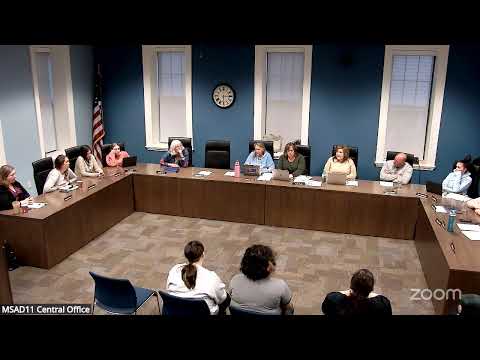
At a finance-committee meeting focused on the 2026–27 budget, MSAD 11’s director of special services explained the distinction between Individualized Education Programs and Section 504 plans and described how the district addresses students who show behavioral needs but do not meet eligibility for a formal plan.
"IEP being individual education plan, individualized education plan," said Sarah Baldic, director of special services, summarizing the program under IDEA that establishes goals and service minutes. She explained that 504 plans typically document access accommodations under Section 504 and are often used for medical or physical needs that limit access rather than to prescribe instructional services.
Building principals and administrators responded that the district commonly uses informal, building-level "success" or behavioral plans that set two goals, track behavior and create incentives when students have needs but do not yet meet the criteria for an IEP or 504. A principal at the podium described the informal plan workflow: identify the behavior, set specific goals, track progress and, if behaviors persist, move toward formal 504 or IEP processes that require documentation and time to evaluate eligibility.
Committee members asked whether these behavior responses carry a financial cost. Administrators acknowledged costs can be significant: when a student requires multiple staff to respond, the district can calculate staff hours and translate them into financial impact. The committee requested follow-up data showing the staff hours and dollars associated with behavioral interventions.
Students on the board spoke about the experiential impact of larger class sizes and behavioral interruptions. "It's less—like for me personally learning, I like having greater access to a teacher and having close relationships with teachers," said student Kira Baldic, describing why larger classes can make instruction and behavior management harder.
Administrators and board members said discussions about behavior, special services and class sizes are relevant to staffing and budgeting decisions; the district will include scenarios and explanatory materials for the full-board meeting Thursday.