Get Full Government Meeting Transcripts, Videos, & Alerts Forever!
Get email alerts on the Adult Education Budget topic
No spam. Unsubscribe anytime.
MSAD 11 finance committee forwards adult-education budget after state funding change
Summary
The MSAD 11 Finance Committee reviewed the 2026–27 adult education budget and agreed to forward it to the full board after administrators described a new state funding arrangement and modest net program increase. The committee was told the state removed adult ed subsidy from ED279, and administrators expect about $72,000 tied to counted 16–20 year-old learners.
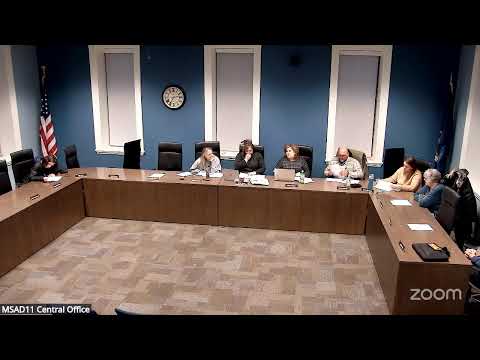
The MSAD 11 Finance Committee on April 7 reviewed the 2026–27 adult education budget and voted to forward the item to the full board for consideration.
Andrea Dish, the district business manager, walked committee members through the adult ed packet, explaining that the program is split between Fund 1500 (instructional programs such as HiSET and career/tech transitions) and Fund 6150 (enrichment classes and trips). Dish said the combined adult-education budget would increase $6,668, or 2.65 percent, year over year.
Dish told the committee that the state has changed how it pays adult education: the funding that previously flowed through the district’s ED279 subsidy is now being routed directly to adult education. "The state has removed the adult ed funding from the ED279," Dish said, adding that the program now receives a separate state subsidy and the district has removed a prior $14,500 internal allocation used to route that money.
Josh Farr, director of adult education, described regional delivery through "hub five" ("Kennebec Neighbors") and said shared programming with Winthrop and Augusta supports efficiency and online HiSET prep. Farr also gave the committee a 16–20 enrollment count: "We had a count of 36 between the two programs last year," he said, and explained the state counts participation in six‑month windows. Farr said the district is modeling roughly $2,000 per counted learner and expects about $72,000 in revenue tied to that cohort for the coming year.
Dish reviewed the revenue worksheet: she cited a projected state subsidy of $71,109.84, a longstanding local appropriation split among the four towns at $105,450 (unchanged), a $3,609.54 adult-ed carryforward, and a $7,698.62 fund transfer needed to balance instructional and enrichment funds.
After questions about line-item reallocations (benefits shifting between instructional and enrichment funds) and changes to catalog printing and mailing, a committee member moved to forward the adult education budget to the full board; the motion was seconded and the committee agreed to advance it. The committee did not record a roll-call tally in the public transcript.
Next steps: the adult-education budget will go to the full MSAD 11 board for consideration at the next meeting.