Get Full Government Meeting Transcripts, Videos, & Alerts Forever!
Get email alerts on the Athletics Track Field topic
No spam. Unsubscribe anytime.
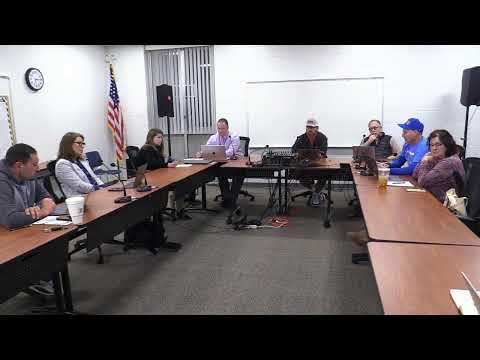
Wahoo board hears Tenata ‘Pivot’ turf pitch, gives direction to design asphalt track
Summary
Representatives from Tenata presented their Gen‑4 Pivot synthetic turf to the Wahoo Board of Education, and after discussing costs and lifetime estimates the board directed designers to proceed with asphalt track plans so bidders can produce firm pricing.
Representatives from Tenata, maker of the Pivot playing surface, described a new Gen‑4 artificial turf and answered questions about safety, durability and cost as the Wahoo Public Schools Board discussed whether to pair a new track with a synthetic infield.
Charles Dawson, Tenata representative, said the company’s Pivot product removes traditional rubber and sand infill and is fully recyclable, describing a 12‑year warranty and an expected useful life of about 15 years. “Our newest product that was just NFL approved by the Biocore Lab just this last week is the safest, most player friendly, longest lasting surface that we’ve ever developed,” Dawson said. He told the board the product’s design reduces surface heat and eliminates the manufacturing lubricant once blamed in press coverage for possible health concerns.
Board members pressed for concrete pricing and lifecycle comparisons before committing public funds. Board members and coaches noted that asphalt tracks typically have about a 30‑year life, while post‑tension concrete is pitched as longer‑lasting but has less long‑term field data. Coach Fox said, “I think asphalt’s adequate,” while other board members emphasized they needed vendor‑specific numbers before fundraising or donor requests.
District staff said rough estimates discussed during the meeting put an asphalt track in the approximate $800,000–$1,000,000 range and a synthetic turf in the $1.1 million–$1.5 million range, but they repeatedly urged the board to wait for firm RFP pricing. Brandon explained the design‑build contract will fund design work; final scope and prices will be set during that design phase.
Given the uncertainty in final pricing but the need to move forward on schedule, the board provided staff direction to the design team to proceed with an asphalt track design so the district can obtain formal cost estimates and later return for contract approval. The board emphasized they would not rely on uncertain recoveries (for example, potential contractor penalties or litigation proceeds) when budgeting the work.
Next steps: staff will seek detailed pricing from Emmy Collins/KSB as part of the design process and return to the board with formal bid or contract approval in March.